Brow Lift

What is a browlift

With aging and sun damage, the forehead skin loses its elasticity and the brows descend. This results in horizontal forehead lines, lower brow positions, and horizontal and vertical frown lines. This combination can give us a “tired” look and can also exacerbate upper eyelid heaviness. The changes can also give one a prematurely aged look.

In a properly performed browlift, these changes are improved. The aim is to improve the horizontal forehead wrinkles, the frown lines between the brows and to elevate the brows and change the shape of the brows into a more pleasing arch.

63 Yrs Old with Fat Droopy Eyes

Salt Lake City, UT

Well, the last time I had a picture taken I could hardly see my eyes because of the weight of heavy eyelid. Then I paid attention to how I was actually using my eyes and I really noticed when I was looking at anything especially the computer I was straining my forehead to see better. Since I have had it done I no longer have to lift the forehead and tilt my head to see. It is amazing! I love…

D. Rock ​

Am I a Candidate for a browlift?

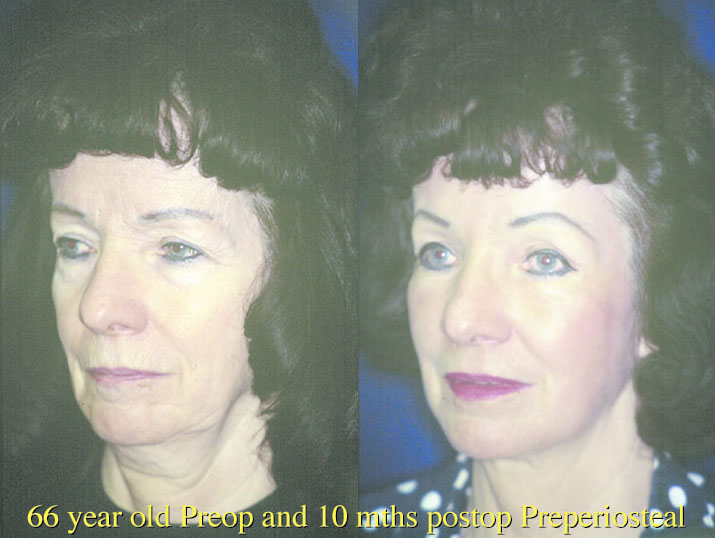
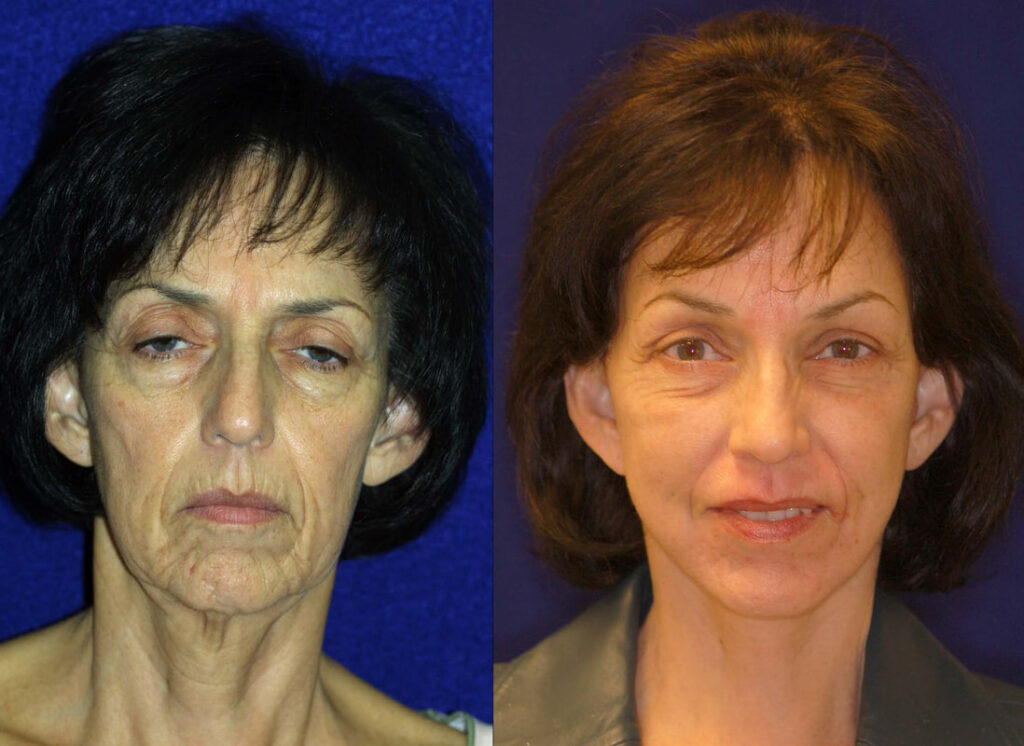
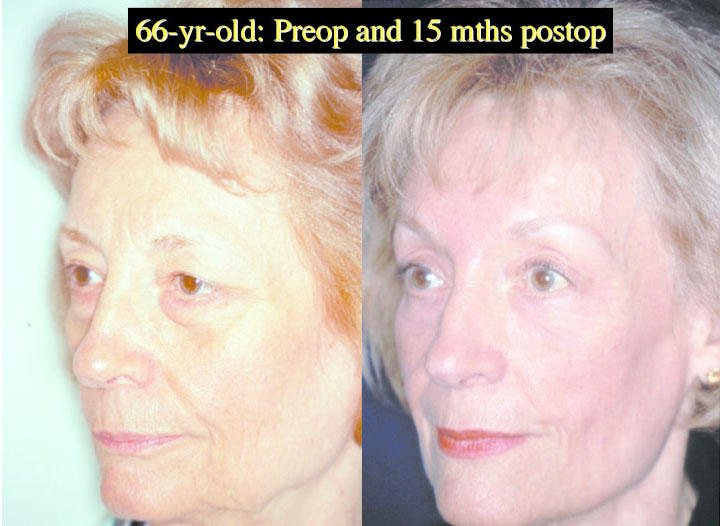
Not everyone needs or benefits from a browlift. Those that have a significant degree of horizontal forehead furrows, together with brow descent and frown lines are helped the most. In ladies, changing the shape of the brow can lead to a very elegant and refined appearance. In most patients, it is possible to show you the type of result one would be aiming for. Of course, this is not an exact science, but more of an art form. A browlift is rarely performed by itself. Upper and lower blepharoplasty and other procedures are often undertaken at the same time. To the right is a patient who underwent a browlift with upper and lower blepharoplasty with a “Hammock Lift” which gave her a very pleasing overall improvement without undergoing a facelift.

Browlifts and blepharoplasty combined with cheek lifts, fat grafts and laser of the skin gives beautiful long-lasting results
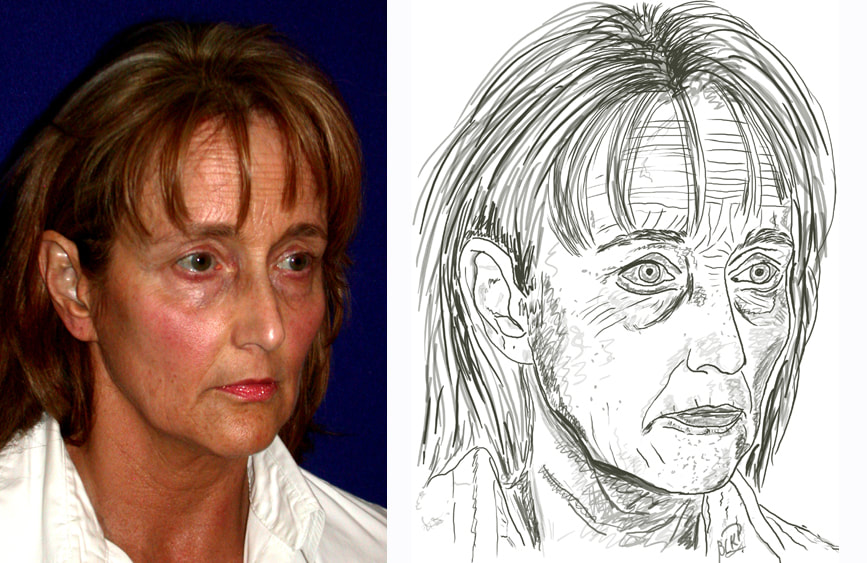
The aging process is best studied with sketches which will show the lines, grooves and shadows that are seen in the aging face

How will I be Assessed?

We will review your photographs from younger days or from when you felt your brows and your eyelids looked good. A physical examination of the anatomic landmarks, your hairline, the height of the forehead, the degree of corrugation of the skin, the brow position, any loss of brow fat pad, secondary dermatochalasis and the relative positions of the brow tail and the brow head are all assessed to determine how much of an improvement may be achieved. Any prior history of trauma or Bell’s palsy is taken into consideration, as is any prior surgery to the brows, eyelids or face. A quick sketch often demonstrates the lines and features that cameras pick up and people notice better than photographs taken with a flash.

How is a browlift performed?

There are different types of browlifts performed: they include a coronal brow lift (which is only rarely performed these days), a pre-trichial brow lift if the forehead is high, a mid-forehead brow lift (of a type designed and published by Dr. Patel), a direct brow lift (which is also only rarely performed because of the scars), and an endoscopic brow lift, which we helped to develop. Dr. Patel has published extensively on advances in how to perform effective endoscopic brow lifts and on newer techniques of fixation that he has designed.

Endoscopic brow lifts are performed via small incisions placed behind the hairline and with a dissection to free the forehead tissues, allowing us to weaken the frown muscles and reposition the brow head, body and tail in such a way as to give a pleasing height and curve to the brows whilst improving the frown lines and depressions. Fixation of the scalp is achieved to the cranium (bone), often using two deep screws (non-magnetic, so no alarms are set off!) and sutures in the temples.

Browlifts are really brow-reshaping procedures and designed to suit the face. They are combined with appropriate weakening of the frown muscles and upper blepharoplasty, sometimes with fat grafts to return the brow fullness back and lasers to decrease the dark circles around eyes.

What other Procedures May be Performed with a Brow Lift?

It is common to perform a brow lift together with an upper blepharoplasty as it allows us to achieve a defined and balanced appearance. Other procedures often performed at the same time are lower blepharoplasty, cheek lifts, fat grafts and face and neck lifts. When patients wish to obtain an overall facial rejuvenation, it is best to divide the procedures into two: first the brows, upper and lower eyelids and cheeks are addressed: this is a technique called the “Hammock Lift” designed and perfected by Dr. Patel and presented at numerous meetings all over the world and published in medical journals. Some months later, the lower face and neck are addressed, together with fat grafts and laser. This allows a completely rejuvenated face.

Browlifts may be combined with upper eyelid surgery, lower eyelid blepharoplasty, face and necklift, laser around the mouth and fat grafts. Combining techniques gives an overall beautiful result
Browlifts combined with upper and lower blepharoplasty, fat grafts and lasers gives a youthful face with a bright animated look

What kind of results can I expect after a Brow Lift?

Forehead wrinkles can give one a tired or aged look. Frown lines can make us look firm, or worse, angry. And low brows, especially in ladies, can give one a less than elegant look. To that end, well-planned brow lifts will yield an improvement on all these fronts. It is never the aim to raise the brows too high: more, it is a matter of shaping them properly. We have many before-and-after photographs to illustrate the types of results one hopes to achieve, depending upon your age, face-type, sex and race.

Highly recommended for eye lift surgery

Salt Lake City, UT

I had a excellent eye lift done by Dr. Patel. He knows what he is doing and is very pleasant. Dr.Patel was easy to get an appointment and he works with you. The office staff was very pleasant and made you feel calm.

D. Gull

How long will my browlift last?

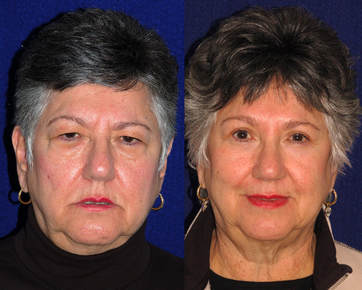
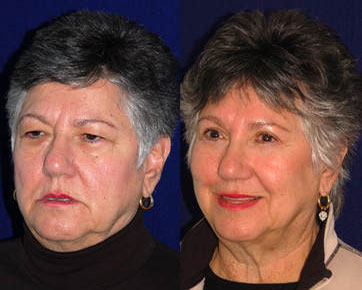
Browlifts combined with upper and lower blepharoplasty judiciously performed makes the face look slimmer! 8 years after surgery.

As with many cosmetic procedures, properly performed procedures will leave you looking more youthful, without looking operated. Essentially, your aging is “set back” by a certain number of years. Of course, you will continue to age and forehead and frown lines may appear and a gradual descent of your brows will occur.

Browlifts, when combined with upper and lower blepharoplasty give, essentially, a top-half facelift! 8 years after surgery.

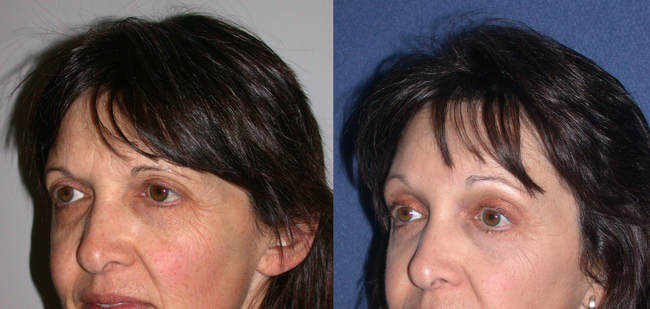
​However, with the use of maintenance out-patient minimally invasive techniques of maintenance (botox, fillers, lasers and peels), where indicated, we generally find that unlike the “old days”, we rarely have to repeat a brow lift. Here is a patient who is 8 years after her brow lifts and upper blepharoplasty.


Frequently Asked Questions

Where will my surgery be performed?

Most brow lifts are performed in an operating theatre for the sake of sterility and your comfort. 

Sedation anesthesia (often called “twilight anesthesia”) or general anesthesia may be used for a brow lift. We have our anesthesia team examine you and

determine what would be best for you. Many patients don’t want to know “what is going on”: for them, the general anesthesia is best.

Non-dissolving scalp sutures are placed: they are removed between two and four weeks after surgery. We do not use staples as they may increase loss of hair if too much pressure is applied.

Lasers will be used to improve the texture of the forehead skin, the fine lines and wrinkles caused by muscle movement.

Most brow lift procedures take about 60 minutes of operating time.

Interestingly, there is usually very little bruising of the forehead. HOWEVER, the bruising and swelling settle on the upper eyelids and the lower eyelids, due to gravity. Again, with the help of ice and sleeping with two to three pillows for a couple of days, we can expedite the resolution of the bruising and swelling. Expect the bruising to last a couple of weeks, but sometimes longer! Gravity!

Usually not. Exceptions are if you have a paralysis of one side of the face, in which case the brow lift is performed for functional reasons. 

Prescription pain medication will be needed for the first two to three days, after which, most patients need only Tylenol or extra-strength Tylenol. 

Most patients need to sleep with two to three pillows for the first two or three nights. This helps reduce the swelling more quickly. You may be up-and-about the very day of the surgery. Gentle exercise (brisk walk on a treadmill or gentle cycling) may be resumed within two days. More vigorous exercise like skiing, tennis, etc may be resumed after 10 days. Most patients return to work within a week (with some swelling and bruising, though!).

Bruising and swelling are universal! However, significant long-lasting complications are rare. Bleeding is rarely a problem with brow lifts.

Everyone will experience some numbness in the scalp: this resoves over weeks to months. This occurs because of the stretch on the sensory nerves with brow and forehead dissection and repositioning. The scalp can be itchy whilst the nerves “wake up”and you may experience pins-and-needles.

The two brows are never the same height in any of us and some mild asymmetry is to be expected. More marked asymmetry is rare.

We don’t shave your hair and protect every follicle of hair! However, you may lose two or three follicles of hair at the incision sites, just from the dissection.

The scars are usually very well hidden within the hair and you may wear your hair in any hairstyle you wish. ​

In some patients, the bruising that settles lower down the face can take a few weeks to resolve. This is because of “tissue staining” by blood products. This resolves over time. In the immediate postoperative period, we will ask you to use ice on-and-off (20 minutes off and 20 minutes off, roughly) for the first few days, followed by warm soaks (face cloth soaked in warm water or a rice bag in a microwave works well) to increase the blood supply to these areas and resolve the bruising more quickly.

​There will be small depressions where the incisions are made in the scalp. You may feel a couple of bumps under the surface where we place sutures and screws. These are rarely a concern: this is just for your information. 

Visit our YouTube channel for expert tips and guidance

Schedule a Consultation Today!