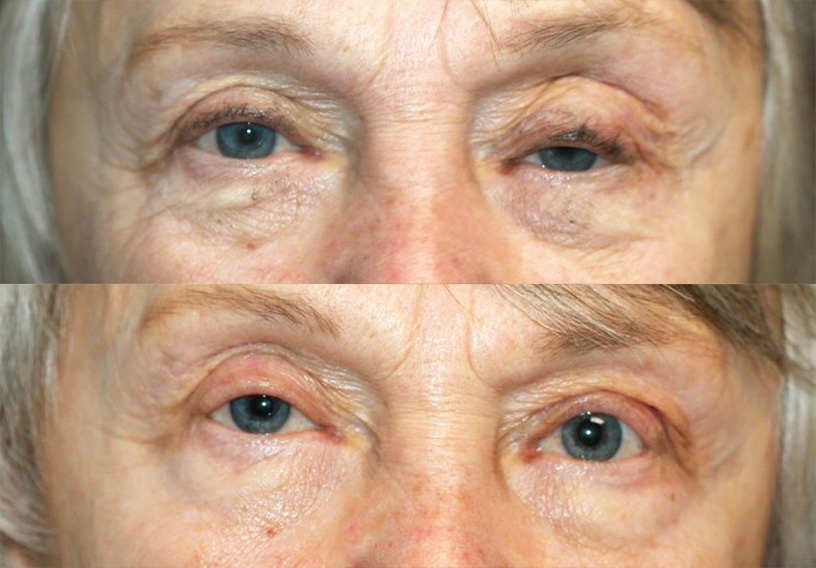
Eyelid Surgery
Eyelid surgery crafts subtle changes around the eyes, but it can make a notable difference in one’s overall appearance. Even slight adjustments in eyelid position and structure can lift away years and restore a youthful, alert facial expression. As the top facial plastic surgeon for eyelid surgery in Salt Lake City and St. George, Dr. Patel’s clinical experience and deep understanding of facial anatomy make him the ideal choice for patients from across the area.
What is Eyeld Surgery?
Also called blepharoplasty, eyelid surgery is a procedure to improve the cosmetic features of the upper or lower eyelids.
Upper Eyelid Surgery
Upper eyelid surgery focuses on removing or repositioning excess skin, muscle, and sometimes fat from the upper eyelids. Often, the goal is to reduce eyelid heaviness or hooding, while other patients may simply aim to improve eyelid contours. Though most cases are purely cosmetic, upper eyelid skin can potentially interfere with the visual field or contribute to eye fatigue.
Our Priorities:
- Conservative changes for subtle effects
- Preserve natural eyelid shape while creating a more open-looking eye
- Emphasize a rested, alert appearance
The most beautiful upper and lower blepharoplasty by Dr. Bhupendra Patel: thank you!
Salt Lake City, UT
Lower Eyelid Surgery
Lower eyelid surgery instead focuses on addressing concerns under the eye. Common concerns include puffiness, under-eye bags, loose skin, and contour irregularities affecting one or both under-eye areas. Using your individual anatomy as the basis, your procedure could involve any combination of fat removal/repositioning, skin tightening, or lower eyelid structure support.
Our Priorities:
- Avoid an overly tight or “operated on” look
- Smooth the lower eyelid-cheek transition
- Maintain natural eye shape
Quad Blepharplasty
Quad eyelid surgery is the name for a combined procedure that includes upper and lower eyelid surgery for both eyes. After all, aging has an unfortunate tendency to affect multiple facial areas rather than a single feature. Quad eyelid surgery, therefore, allows patients to fully revitalize the areas surrounding both eyes.
Combined Eyelid Surgery
Combining surgeries is often essential to seeing highly natural-looking results. The right combination will address core signs of aging and ensure your results build on each other. At times, a solo procedure may rejuvenate one area, but it may look unnatural if the surrounding area still shows heavy signs of aging. Dr. Patel strategically plans combination procedures to involve the least amount of changes while integrating each cosmetic improvement to a seamless whole.
How will I be Assessed?
Dr. Patel begins with a detailed assessment, assessing your health and concerns to determine the optimal surgical approach.
Evaluation includes:
- Eyelid skin quality
- Fat distribution
- Brow position
- Lower lid support
- Tear film health
- Whether upper lid skin affects vision
- Medical history
- Expectations and goals
- Lateral canthal laxity
- Lateral canthal dystopia
- Lower lid laxity: distraction test
- Lower lid laxity: snap-back test
- Lower lid fat bags
- Nasojugal and malar grooves
- Malar angle: negative or not
- Cheek Ptosis
- Festoons
- Redundant skin
- Orbicularis laxity
- Solar elastosis
- Pattes d’oie
- “Dark circls”
- Previous surgery/cicatricial changes
Procedure Day & Techniques Used
Anesthesia: You will receive local anesthesia injections at the surgical sites. Sedation is also commonly used, which helps create a more positive experience.
Incisions: Incisions are placed in natural upper eyelid creases, inside the lower eyelid, or just below the lash line, depending on the technique.
Adjustments: Dr. Patel may remove excess skin, adjust fat pads, reposition tissue, or tighten support structures.
Conclusion: Incisions are closed. You are taken to a room to rest for a time before returning home the same day.
Downtime, Recovery, & Results
Downtime: Expect to take 7 to 10 days off from work (and social engagements). Instead, focus on resting at home and following your post-procedure instructions.
Recovery: Swelling and bruising should notably resolve after 1 to 2 weeks. The exact rate will vary, but residual swelling will continue to improve over several months.
Results: Initial results can be appreciated once enough swelling and bruising have faded. Residual swelling may not be visible, but it can still subtly influence how your results look. As such, final results are typically fully refined after 3 to 6 months.
Brilliant Surgeon
PARK City, UT
5 stars is not enough for Dr. Patel! He fixed my upper eyelid surgery that a previous doctor had done. And he was respectful in speaking about the other doctor, and did not blame him. He is the best in the business; he knows his stuff, explains things well, is patient and takes his time to make sure he’s doing the best job possible. He is very personable, down to earth and kind. I’ve always been very confident in his care and know that he’ll get me the results I want. I love him!
M. Summers
Frequently Asked Questions
Is eyelid surgery painful?
The surgery itself should involve no pain. Modern local anesthetics completely block sensation, allowing for a comfortable experience. Afterward, some discomfort or pain are normal. Most of our patients report about a 3 or 4 out of 10 for pain. Over-the-counter pain relievers can help bring that down to a 2 or lower. Only in select cases will stronger pain medication be prescribed at Dr. Patel’s discretion.
Will eyelid surgery improve my vision?
How noticeable are eyelid surgery scars?
The surprising truth is that they should eventually not be noticeable at all. This especially holds true for lower eyelid surgery. For this procedure, incisions can often be made within the eyelid, fully hiding them. Upper eyelid surgery does involve some visible scarring. However, Dr. Patel keeps incisions restricted to eyelid folds. This hides the scarring from view. Good aftercare will also help scarring further improve over time.
Can eyelid bags come back after surgery?
Eyelid bags can partially return after surgery but typically not in the same way if the fat pads were properly addressed. Lower blepharoplasty can create long-lasting improvement, but biological factors can influence the under-eye area. These factors include:
- Natural aging
- Skin laxity
- Fluid retention
- Allergies
- Weight changes
- Genetics