Midface Lift / Hammock lift

What is a hammock Lift?

The power of the hammock lift as designed by Dr. BCK Patel MD, FRCS

The concept of a “Hammock Lift” was presented by Prof. BCK Patel at a Plastic Surgery Meeting and then developed with presentation of surgical results to illustrate the importance of looking at the face as a whole, rather than in parts.

In basic terms, the Hammock Lift achieves an improvement in the forehead, the brows, the frown lines, the upper eyelids, the lower eyelids, and the midface: in other words, there is improvement of the top two-thirds of the face in a congruous fashion. We also include fat grafts and skin treatments (CO2 laser, peels, etc as needed) to give a 3-D improvement in the top two-thirds of the face.

63 Yrs Old with Fat Droopy Eyes

Salt Lake City, UT

Well, the last time I had a picture taken I could hardly see my eyes because of the weight of heavy eyelid. Then I paid attention to how I was actually using my eyes and I really noticed when I was looking at anything especially the computer I was straining my forehead to see better. Since I have had it done I no longer have to lift the forehead and tilt my head to see. It is amazing! I love…

D. Rock ​

What is a Midface Lift?

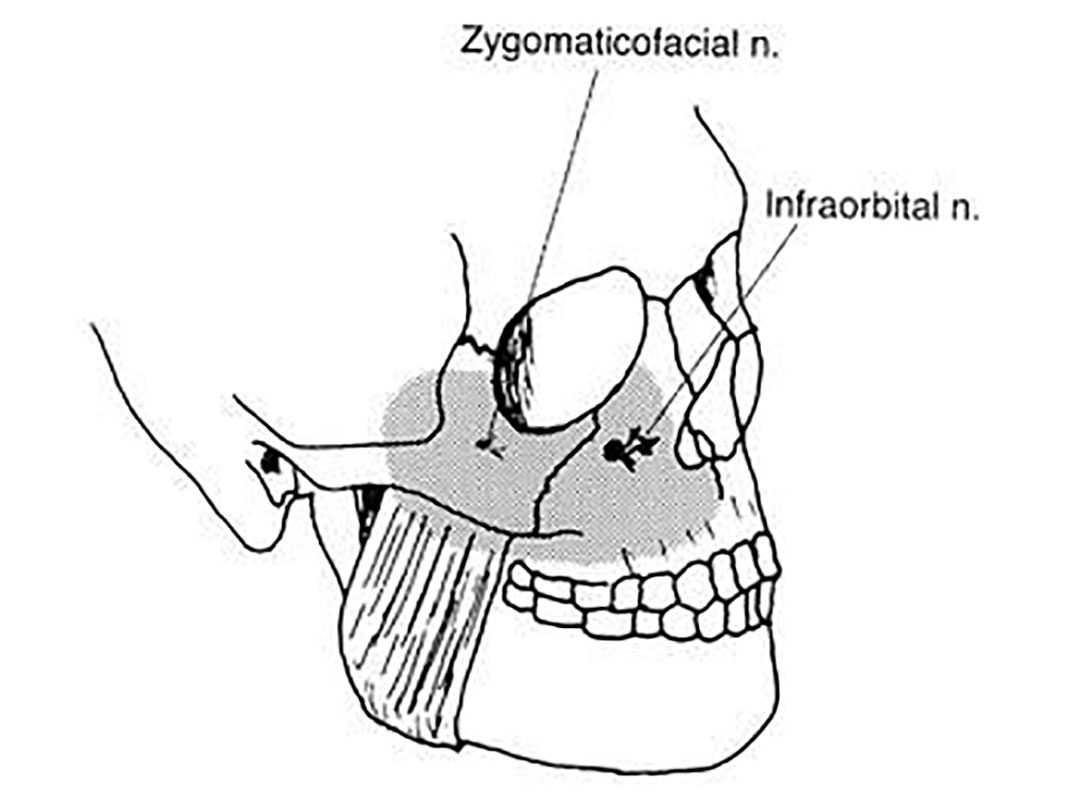
Also known as cheek lifts, midface lifts are designed to give the natural fullness back to the cheeks, to improve the groove that occurs with aging below the lower eyelids and lift the mid and lateral part of the face. This is best illustrated photographically in the following before-and-after photographs.

Plastic surgeons have concentrated on upper and lower blepharoplasties and lower face and neck lifts and have long ignored the midfacial structures. Dr. Patel, together with others studied this midfacial ages and developed and published surgical techniques which have helped improve the results of facial rejuvenation.

The midface lift is part of the Hammock Lift giving an improvement in the cheeks, the lower eyelids and creates a congruous balanced look to the upper two-thirds of the face.

What are the treatment options for lips?

If the dermatochalasis (heaviness of the upper eyelids caused by skin and fat) interferes with vision, an upper blepharoplasty may be performed to improve the fields of your vision. We would assess your vision and your fields of vision to see if functional surgery would benefit you.

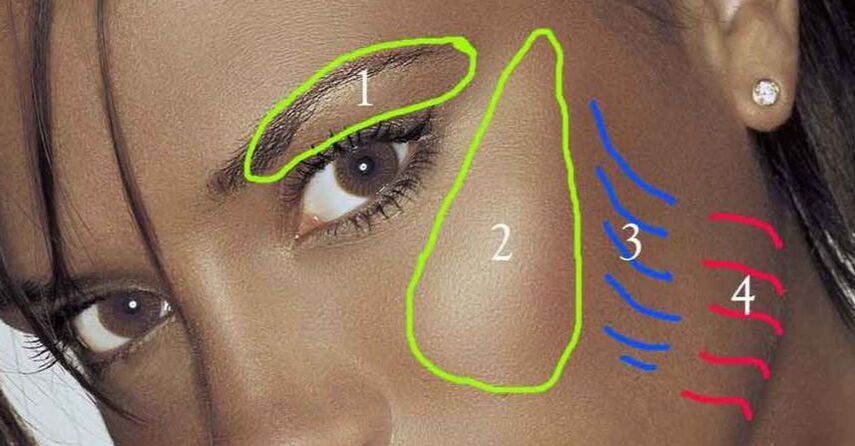
  1. This is the fullness so important in the brow. There has been a tendency to remove brow fat pads when plastic surgeons perform upper blepharoplasty or browlifts: this is a mistake. We, on the other hand, always augment the brow with fat grafts during surgery to give this nice fullness back again. Aging results in decompression of the brow fat pad.
  2. This is the all-important malar mound or fullness. It has a particular shape and position that must be understood by the persnickety plastic surgeon if he/she is to achieve the best results. Just below this malar fullness sits a hollow that is possessed by all models! Look up photographs of any female models and you will be struck by the consistency of the presence of the malar fullness and the sub-malar hollow. We therefore try to recreate both of these, even in patients who never had them as it just makes the face more beautiful!
  3. This is the sub-malar hollow discussed above.
  4. The submalar hollow leads to the firm convex jawline. Therefore, the midfacial anatomy is multicontoured: the face or the mid face should not be just pulled as has often beendone. These contours, hills and valleys must be constructed to give the ideal result.

Am I a Candidate for a Midface Lift?

Most midface lifts are performed in conjunction with lower eyelid blepharoplasty. Just as brows and upper eyelids function as a unit, so do the lower eyelids and cheeks. Indeed, a common combination to improve the appearance of the upper and middle part of the face is to combine a brow lift with upper and lower blepharoplasty and cheek lifts: the specific way of doing this was designed by Dr. Patel (called the Hammock Lift) who has presented the technique at international meetings and published this technique in plastic surgery journals.

How will I be Assessed?

​It is always useful to review your photographs from younger days as we all age similarly but differently! In particular, the prominence of the cheeks depends not just upon the bony prominence (which decreases with time), but also the degree of malar fat and relation of the cheeks to the angle of the jaw. This combination of structures needs to be assessed, both, on the photographs as well as on you to determine how much of an improvement would be achieved with a midfacial lift.

What are the treatment options for lips?

Patients may benefit from attention to upper eyelids (upper blepharoplasty), forehead and brow lifts, cheek lifts, face and neck lifts, fat injections, laser resurfacing and other facial and neck procedures. Please do not hesitate to ask us questions about any other aspects that may bother you. We always remind all our patients: no one NEEDS cosmetic surgery. But if you decide you would like to see an improvement in any aspect of the face, we will pay close and careful attention to ensure only appropriate and safe procedures are performed.

In the presence of a deep groove and ptosis of the cheek, it is unwise to perform just a lower blepharoplasty: your results will be ho-hum! In such instances, a midface elevation with fat transfer combined with a lower blepharoplasty gives the best result. If this applies to your anatomy, it is important to identify the factors before undergoing surgery!

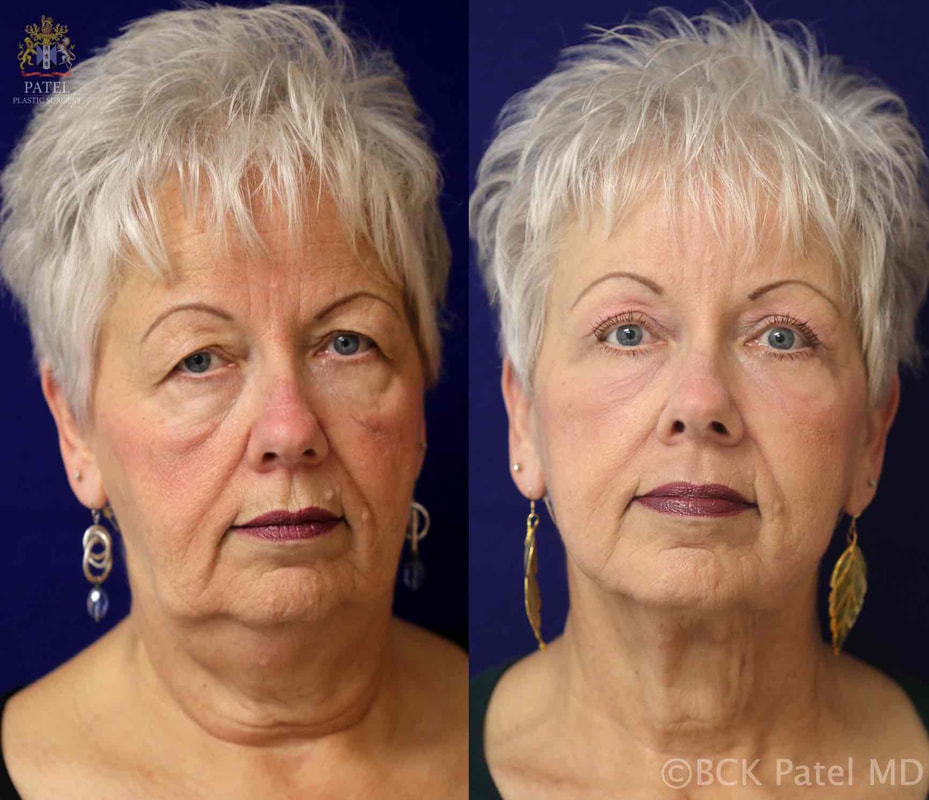
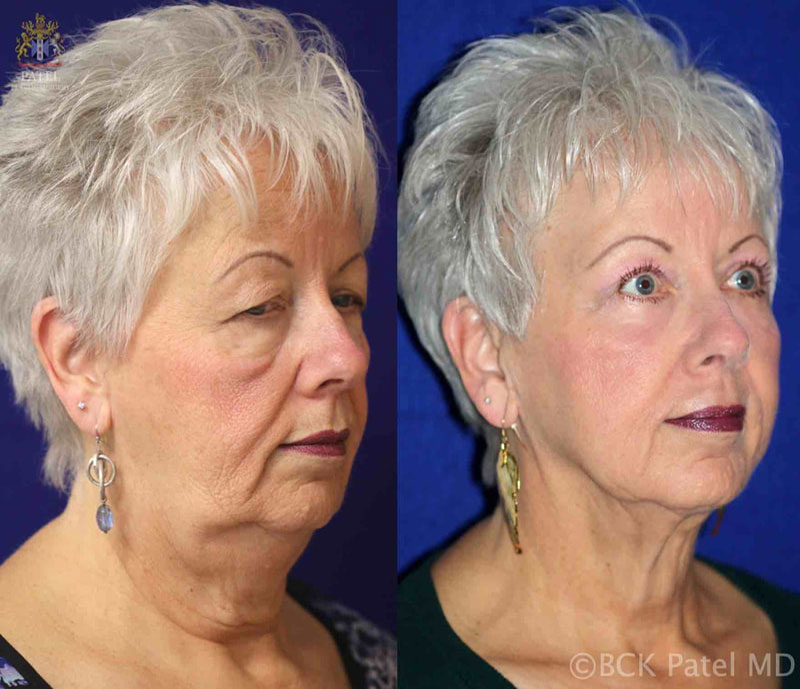
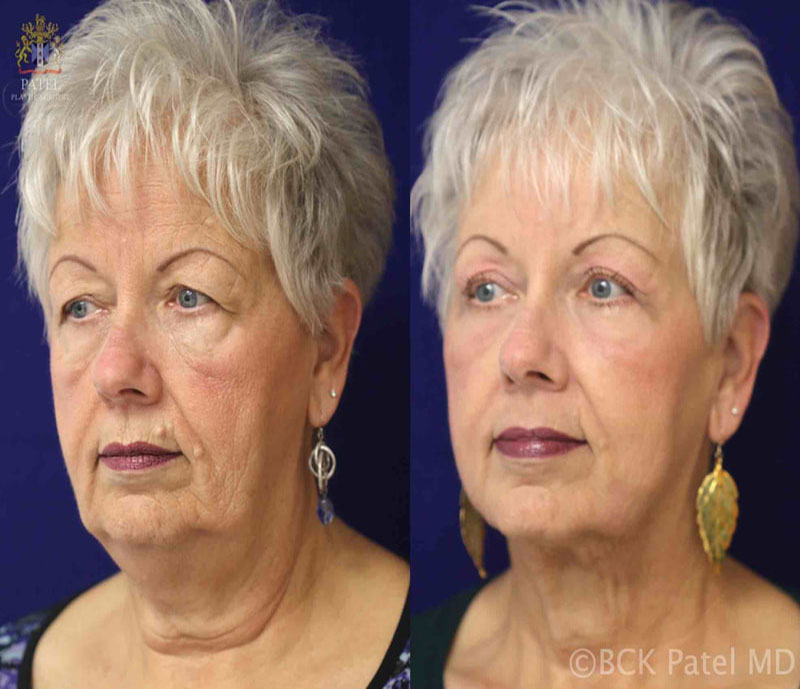
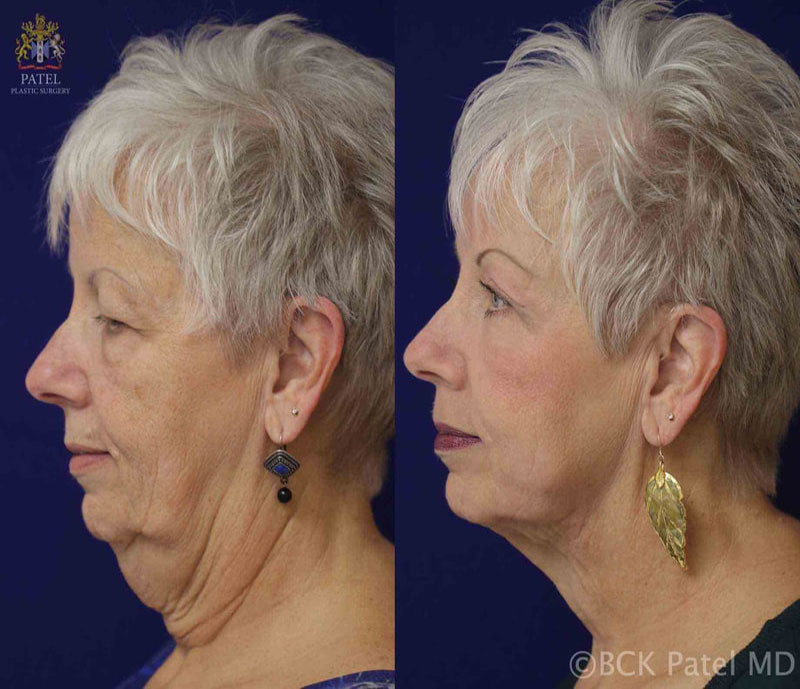
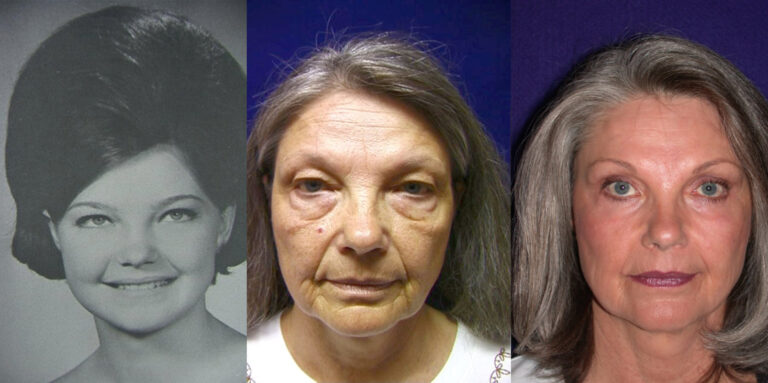
Hammock Lift Results: Fat grafts and surface lasers are often used together with midface lifts to give the best results.

An example of a Hammock Lift by Dr. BCK Patel MD, FRCS. Note the improvement in the forehead, the brows, the upper eyelids and the cheeks. Further improvement is achieved in the skin with a combination of nano fat grafts and fractionated lasers

understanding the "Hammock Lift" with a case study

PATIENT CONCERNS
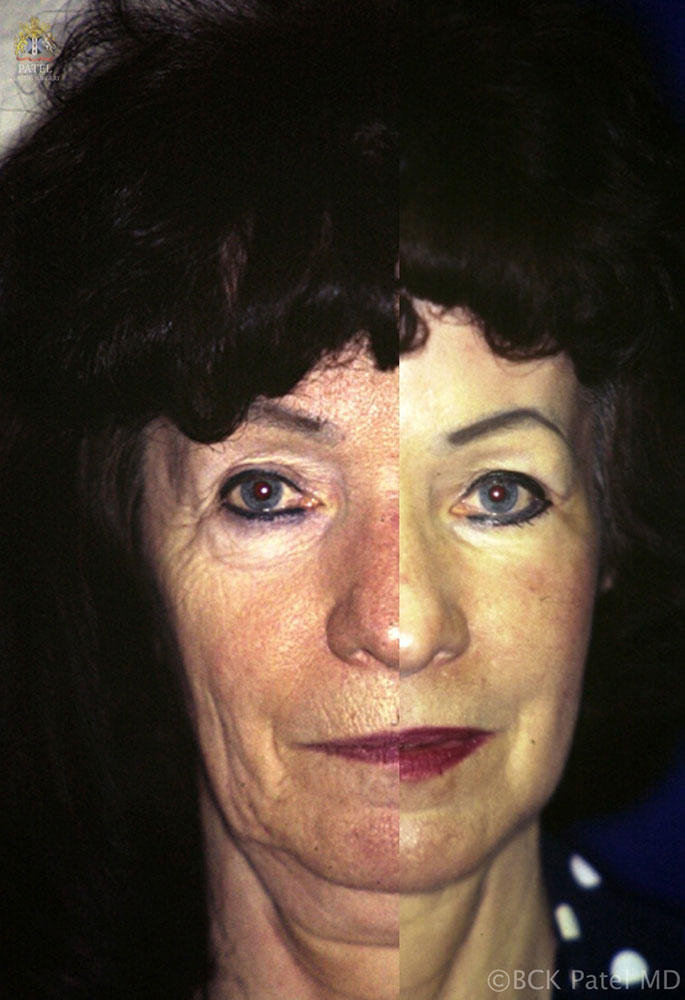
This patient was bothered by “my face”. However, specifically, she wanted an improvement in her forehead, upper eyelid looseness, lower eyelid bags, lip lines and jowls. But she did NOT want a facelift and necklift just yet.

HAMMOCK LIFT PERFORMED
This is a combination of a forehead/brow reshaping combined with upper and lower blepharoplasty and a technique of midfacial tissue repositioning we have developed with not only recreates the cheek fullness of youth whilst reducing the lower fat “bags”, but also helps with lower facial and jowl improvement. We routines use skin treatments (lasers, peels, etc) to improve the overall improvement of the face.

This is not meant to be a replacement for a lower face and necklift which is what is needed to get the best jawline and neck, but this combination of procedures we have been using on our patients allows us to manage the face in two halves: the “Hammock Lift” first, which gives excellent results. Followed by a lower facelift and necklift when the patient is ready.


A split-face image showing the right side of the face before and the right side of the face flipped on the left after surgery so a direct comparison may be made. The improvement in the lip wrinkles (smoker's lines) and skin is from the use of fractionated CO2 laser at the same time as the Hammock Lift procedure

The Hammock Lift

Park City, UT

“My Hammock Lift is exactly what I needed, but did not know! Dr. Patel explained to me how the Hammock Lift improves the upper two-thirds of the face, including the forehead lines, the brows, the upper and lower lids and the cheeks. I also got an improvement along my jawline which I am thrilled with as I plan on having a lower facelift and necklift later but this has already given me a terrific improvement. I have sent my two sisters to him! Brilliant surgeon: can’t speak highly enough about him or his excellent team.”

​J. Stevenson

What kind of results can I expect after a Hammock Lift?

A picture tells a thousand words:
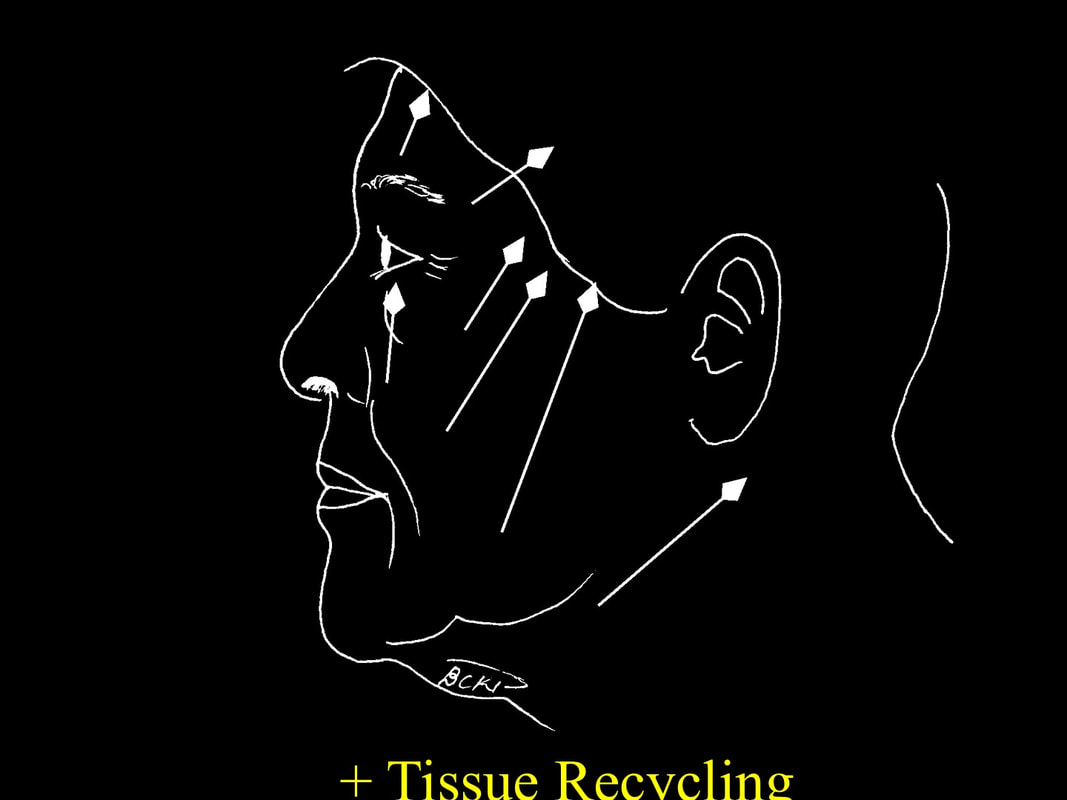
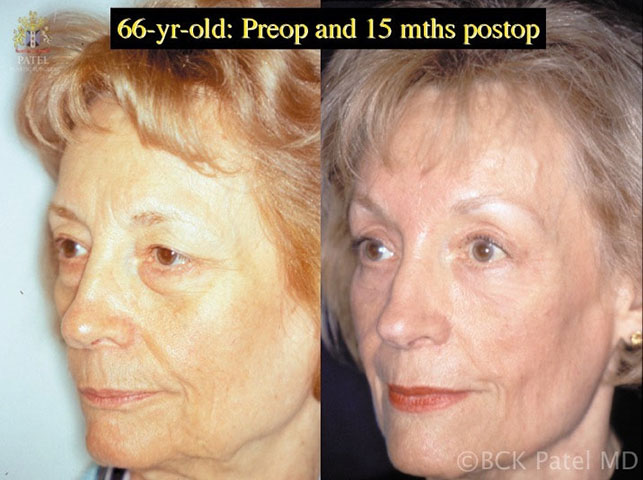
The aim is to achieve a congruous balance between the forehead, the upper eyelids, the lower eyelids and the cheeks. A nice benefit of a well-performed cheek lift is the improvement one sees in the lower part of the face. Whilst the midface lift is no substitute for a lower facelift and neck lift, in those patients that don’t (yet) need a lower facial procedure, it is an excellent “side-benefit”.

Midface rejuvenation With brow lifts and upper blepharoplasty: the "hammock lift"

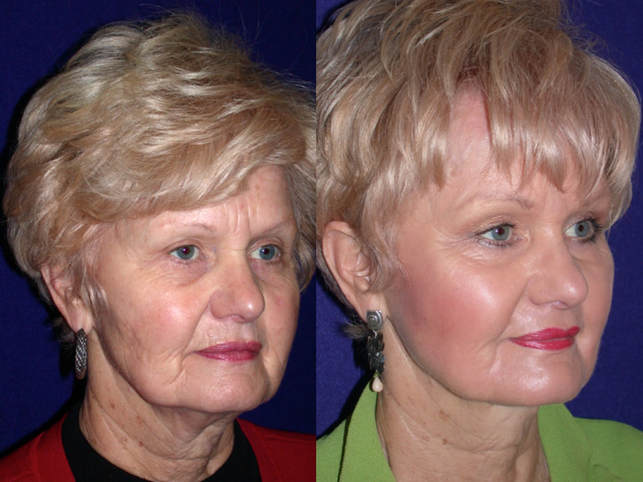
Three-dimensional improvement in the forehead, the brows, the upper and lower eyelids and cheeks. Note the secondary improvement in the jowls and jawline without performing a full facelift. Also note the improvement in the skin texture and new collagen

Reversing aging by midface surgery ("Hammock lift") in a model

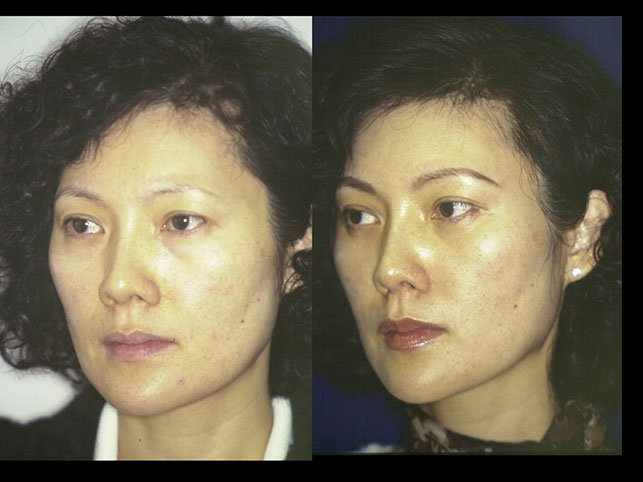
Hammock Lift in an Asian face achieves beautiful balance of the forehead, brows, upper and lower eyelids and cheeks. Note the elegant shape of the face and jawline now

The Hammock Lift: ​Midface rejuvenation With brow lifts and upper & Lower blepharoplasty

Note the marked improvement in the skin because of the use of nano fat grafts and lasers together with performing the Hammock Lift as designed and described by Dr. BCK Patel MD, FRCS

Midface rejuvenation With brow lifts and upper blepharoplasty: the "hammock lift"

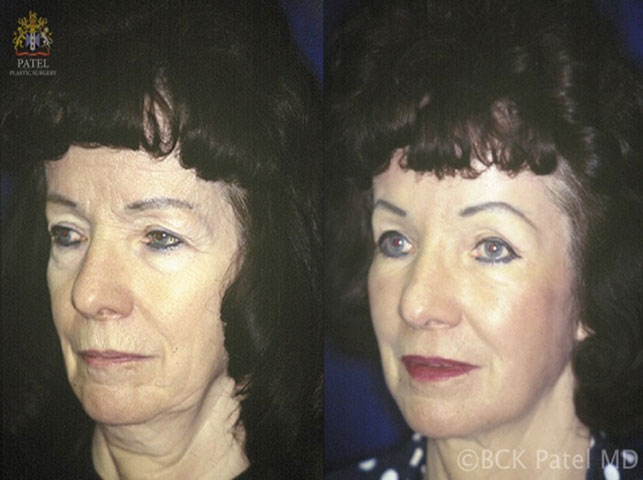
Hammock Lift by Dr. BCK Patel MD, FRCS: a tremendous improvement in the forehead, upper and lower eyelids and cheeks but note the improvement in the jawline and lips and skin condition without performing a facelift

Highly recommended for eye lift surgery

Salt Lake City, UT

I had a excellent eye lift done by Dr. Patel. He knows what he is doing and is very pleasant. Dr.Patel was easy to get an appointment and he works with you. The office staff was very pleasant and made you feel calm.

D. Gull

Frequently Asked Questions

Where will my surgery be performed?

Most midface lifts are performed in an operating theatre for the sake of sterility and your comfort. 

As midface lifts are often performed in combination with other procedures, most patients receive general anesthesia.

There will be permanent sutures in the temples (these are removed between 2 and 4 weeks after surgery) and dissolving sutures on the outer corner of your lower eyelids: these dissolve in about seven to fourteen days. These dissolving sutures may become itchy as they begin to dissolve and it is fine to gently scratch the incision line.. The prescribed ointment will also help with the itching, as will oral Benadryl (over-the-counter). ​

We use a number of tools, including lasers to give our patients the best possible results. Laser resurfacing, when performed in combination with a cheek lift procedure gives a nice improvement in the skin texture, wrinkles and colour.

Most midface lift procedures take 60 to 90 minutes operating time.

Everyone gets bruising and swelling after cheek lifts! Care is taken during surgery to reduce the degree of bruising our patients get. We will also show you how to apply ice to the cheeks after surgery to reduce the swelling and bruising. The worst of the bruising and swelling is over within a week. However, some residual bruising and swelling can take another few days to disappear. Also, the use of the laser leaves the skin rather pink for the first week, after which the pinkness fades slowly. I always remind patients that “it takes us 20, 30, 40 years to age, so a few weeks of proper healing is not surprising.”

Cosmetic surgical procedures are never covered by insurance. ​

There will be a sensation of tightness on the outer corner of the lower eyelids for the first couple of weeks. Numbness and a little stiffness of the lower eyelids and cheeks is also to be expected. The lower eyelids and cheeks will feel somewhat tight for a few weeks: this is to be expected in the immediate postoperative period and does settle. Only moderate pain is experienced by our patients. Most of my patients tell me they just need Tylenol or extra-strength Tylenol after surgery. And even that, just for the first one to two days. ​

Most patients need to sleep with two to three pillows for the first two or three nights. This helps reduce the swelling more quickly. You may be up-and-about

the very day of the surgery, albeit with some degree of blurry vision because of the healing eyelids. Gentle exercise (brisk walk on a treadmill or gentle cycling) may be resumed within two days. More vigorous exercise like skiing, tennis, etc may be resumed after 10 days. Driving may be difficult for the first two to three days because of blurry vision. Most patients return to work within a week. ​

Bruising, swelling and blurry vision are not risks: they occur in every patient. Some degree of asymmetry is inevitable as this is always the case prior to surgery as well. Some degree of bleeding and oozing of blood-stained fluid for the first few days is also normal..

In the first few days, everyone will experience some degree of dryness and blurry vision. You will also feel that your lids look a little tight on the outer corner where you will also feel some of the deeper sutures if you put your finger there: this is of no concern. The tightness and the bumps under the skin settle over a few weeks.
More serious complications which are very rare include excessive bleeding, and persistent numbness over the cheeks.

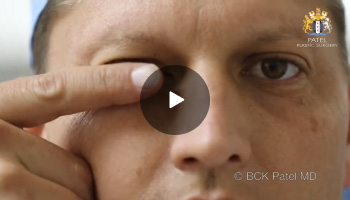
It is common to develop some chemosis: this is where fluid collects under your conjunctiva. This is not a sign of an infection and nothing has gone wrong. This is fluid that collects because of the surgery and local inflammation. In most people, it just settles without any other intervention. Some people will need an upward pressure on the lower eyelids as show in our video: this will be needed in some patients twice a day for a week or two.

Visit our YouTube channel for expert tips and guidance

Schedule a Consultation Today!