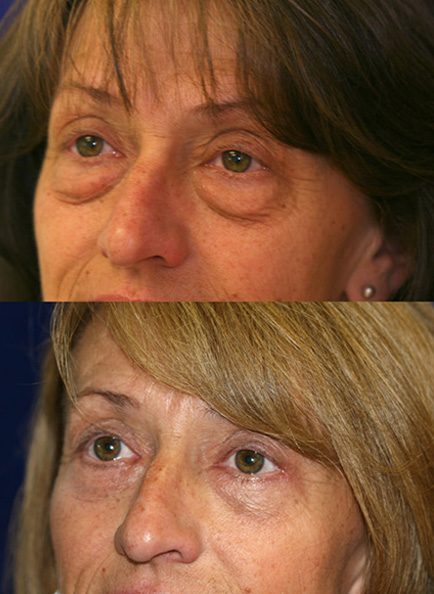
Dark circles under the eyes can make you look aged and tired, even after a full night’s rest. Many people try topical products, such as creams and serums, to address the issue. Some even try fillers or implement lifestyle changes to address the issue. However, these are often unsuccessful, as the issue is structural. A hollow or sunken lower eyelid can create shadows that mimic dark circles. The shadows persist regardless of lifestyle habits or the use of topical products. However, there are several effective treatment options to address the issue. You may wonder, can lower blepharoplasty fix dark circles?
Can Lower Blepharoplasty Fix Dark Circles?
Lower blepharoplasty can improve the appearance of dark circles in certain patients. When under-eye shadows are due to structural issues, surgery can provide meaningful improvement. The surgery addresses excess skin, fat pockets, and hollowness under the eyes. Determining if the surgery is right for you begins with a consultation at a top plastic surgery center. Lower blepharoplasty is highly effective, but a skilled surgeon can determine if you are a good candidate. With appropriate lasers and injection with plasma derivative fractions and stem cells derived from fat, the lower eyelid skin can be thickened. This is done in conjunction with a lower blepharoplasty and greatly improves the thinning skin and also the discoloration. Other treatments may also be used during and after surgery when vascular changes and pigment changes are addressed with the appropriate peels, lasers and other devices.
Common Causes of Dark Circles
Several factors can cause under-eye discoloration. Understanding the cause ensures you get treatment that is right for you.
Fat Pad Herniation
Under-eye fat pads can shift forward and bulge over time. This fat normally cushions the eye and leaves the area under the eyes smooth. However, fat pad herniation under the eye creates a visible bulge. This shift in tissues creates a groove between the upper cheek and lower eyelid. The resulting change in structure can cause a shaded effect that looks like dark circles. The deepened tear trough is best addressed with surgical intervention. Without surgery, the tear trough deepens as the surrounding tissues weaken.
Under Eye Volume Loss
The natural aging process results in changes to the under-eye area as well. Natural fat and collagen beneath the eyes gradually diminish over time. Poor lifestyle habits can accelerate these changes. When collagen decreases and fat diminishes, the under-eye area can look hollow and sunken in.
The skin under the eyes is more susceptible to signs of aging because it is much more delicate. When skin thins, it also becomes more translucent. Underlying blood vessels become more visible, resulting in dark circles.
Both lost volume and thinning can create a visible shadow across the lower eyelid. Patients may also see this occur after significant weight loss. Surgical intervention is necessary to address the issues. Volume loss cannot be addressed with topical products or lifestyle changes alone.
Genetic Pigmentation
A common cause of pigmentation is racial (genetic). This type of pigment cannot be eliminated completely, but may be improved using a number of devices, including peels, the Aerolase laser and vascular lasers. We also use PRP, PRF and exosomes to improve skin in patients with genetic pigmentation.
What to Expect During Your Consultation
The first step in moving forward with lower blepharoplasty is scheduling a consultation with a skilled surgeon. The surgeon will examine your skin quality, fat distribution, and the degree of hollowing. They will also review your medical history, current health, and discuss any previous treatments you have had. It is necessary to share your aesthetic goals with the surgeon. This assessment is necessary to determine if lower blepharoplasty is right for you. If you are determined to be a good candidate, a surgical plan will be created to meet your unique needs.
Lower Blepharoplasty Surgery
Lower blepharoplasty is effective in addressing under-eye hollowness and dark circles.
The surgery involves removing or repositioning the fat under the eyes. This smooths the transition between the upper cheek and lower eyelid. For many patients, the fat has shifted downward due to natural aging or poor lifestyle habits. The loss of fat creates a hollow under the eye, followed by a bulge right under it. Repositioning the fat fills the hollow and reduces under-eye shadows. The procedure also involves trimming the excess skin under the eyes, if needed. The techniques used can smooth the under-eyes and can take years off your appearance.
The surgery is performed on an outpatient basis, meaning you can go home the same day. It is often performed under local anesthesia with sedation. This ensures your comfort throughout the procedure. In some cases, general anesthesia may be used. This will be discussed at your consultation, so you are prepared on the day of your surgery.
Top Plastic Surgery Center
Aging and lifestyle habits can make your under-eyes look older faster. If you want to improve the look of your eyes,
contact the team at Patel Plastic Surgery today to schedule your consultation!