Deep Plane Facelift and Neck Lift: Why it is important for you to send us your “bad” photographs
Deep Plane Facelift and Neck Lift: Why it is important for you to send us your “bad” photographs
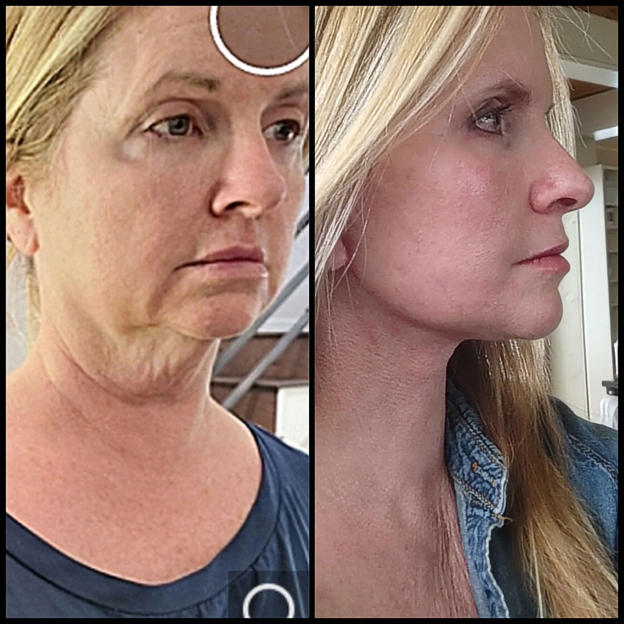
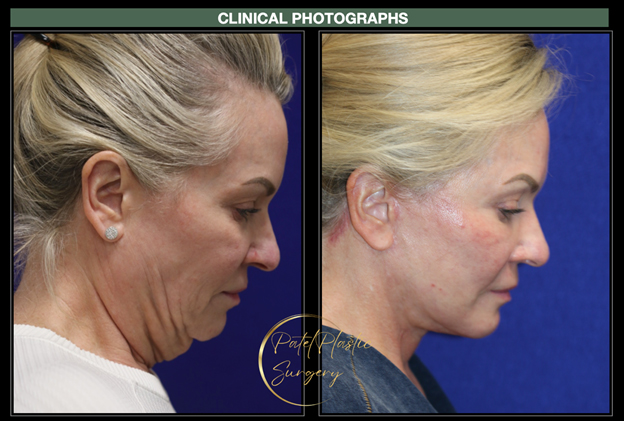
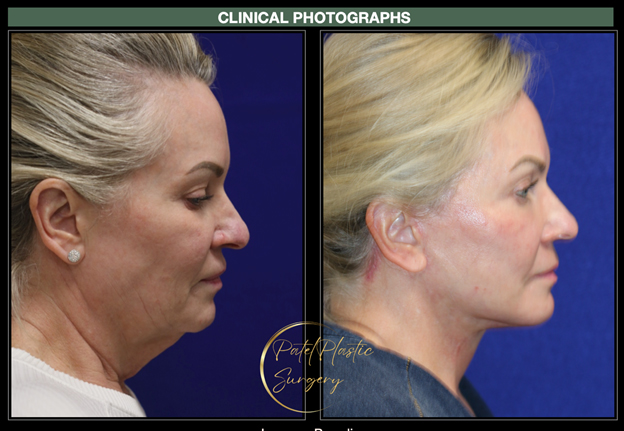
Patient provided us with a “bad” photograph which showed us what she did not like. Based upon our analysis, we performed a deep plane facelift and necklift combined with lasers and stem cells treatment to obtain the following results in the final photographs on this page.
The appearance of the face and even the jawline and neck is different day to day. Overnight, fluid leakage into the tissues causes puffy upper and lower eyelids and even puffy jowls. Similarly, diet (e.g., a salty meal, wine), tiredness (lack of sleep), stress, and other factors can also affect how we look. Since we are generally examining patients during the daytime when patients are fresh, we are not seeing them at their worst. To that end, we encourage our patients to take photos of their face (and jawline and neck) when they have a “bad” day.
Patient sent us the “bad” photo with her iPhone. We used it to design her deep plane facelift and neck lift, together with the use of fractionated lasers, stem cells, and Aerolase laser. You can see her results on the right, also taken by the patient using her iPhone, 6 months after surgery.
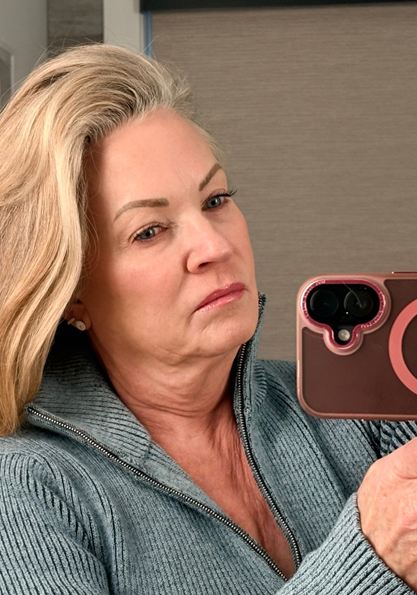
Also, everyone has looked at photographs taken by others when we erase the photograph because “I don’t like how I look.” These are also the photographs that we like to review. By assessing your face with our own measurements and photographs, but also by looking at your face, jawline and neck on “bad” days, we can plan your surgery more accurately. You will still have fluid leakage and good and bad days. But with a proper review of the “bad” photographs, we can design the deep plane facelift and neck lift to make these changes less extreme.
These two photos and the other two above show the profile results for the patient from the beginning of the article.