Aging is determined by genetics and environmental factors, including diet, smoking, lifestyle, disease, exposure to the elements, and other factors. It has always been assumed that aging is linear: that we age year-after-year and decade-after-decade. Recent studies centered on people between the ages of 25 and 75 years have shown that there are two waves of aging changes: the first occurs around 44 years of age and the next at around 60 years of age. Studies involved assessing RNA, proteins, and metabolites and also microbes living in the guts of the subjects. They found the largest shifts indicating aging to occur in the mid-40s and the early 60s.
The mid-40s spike is not just caused by the perimenopausal changes seen in women because similar accelerated aging was seen in men in their mid-40s as well. They also found that molecules linked to skin and muscle aging also showed change at those two age periods. It is also thought that there is a third aging spike around the age of 78 years. Alcohol intake and smoking also exacerbate aging, as has been known for some time.
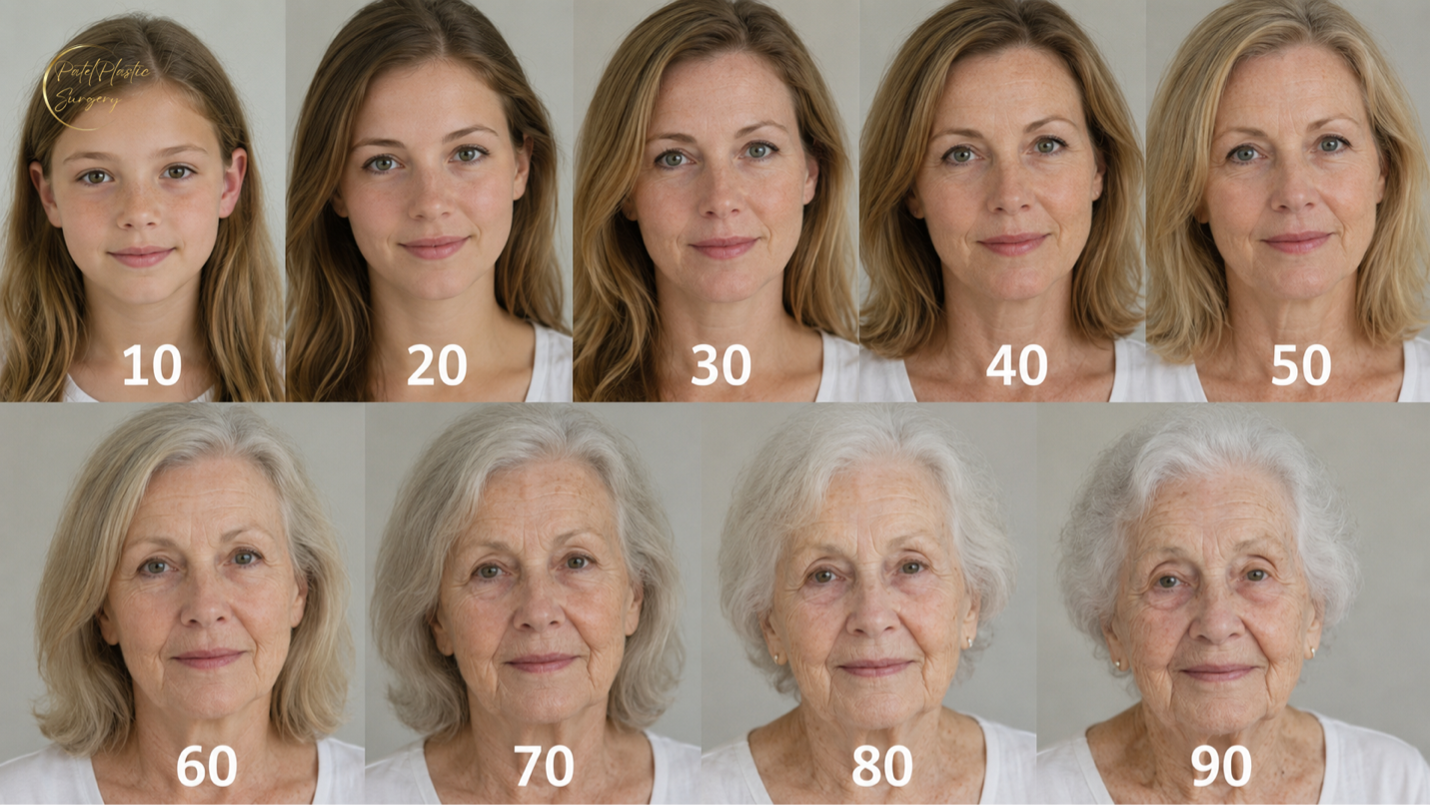
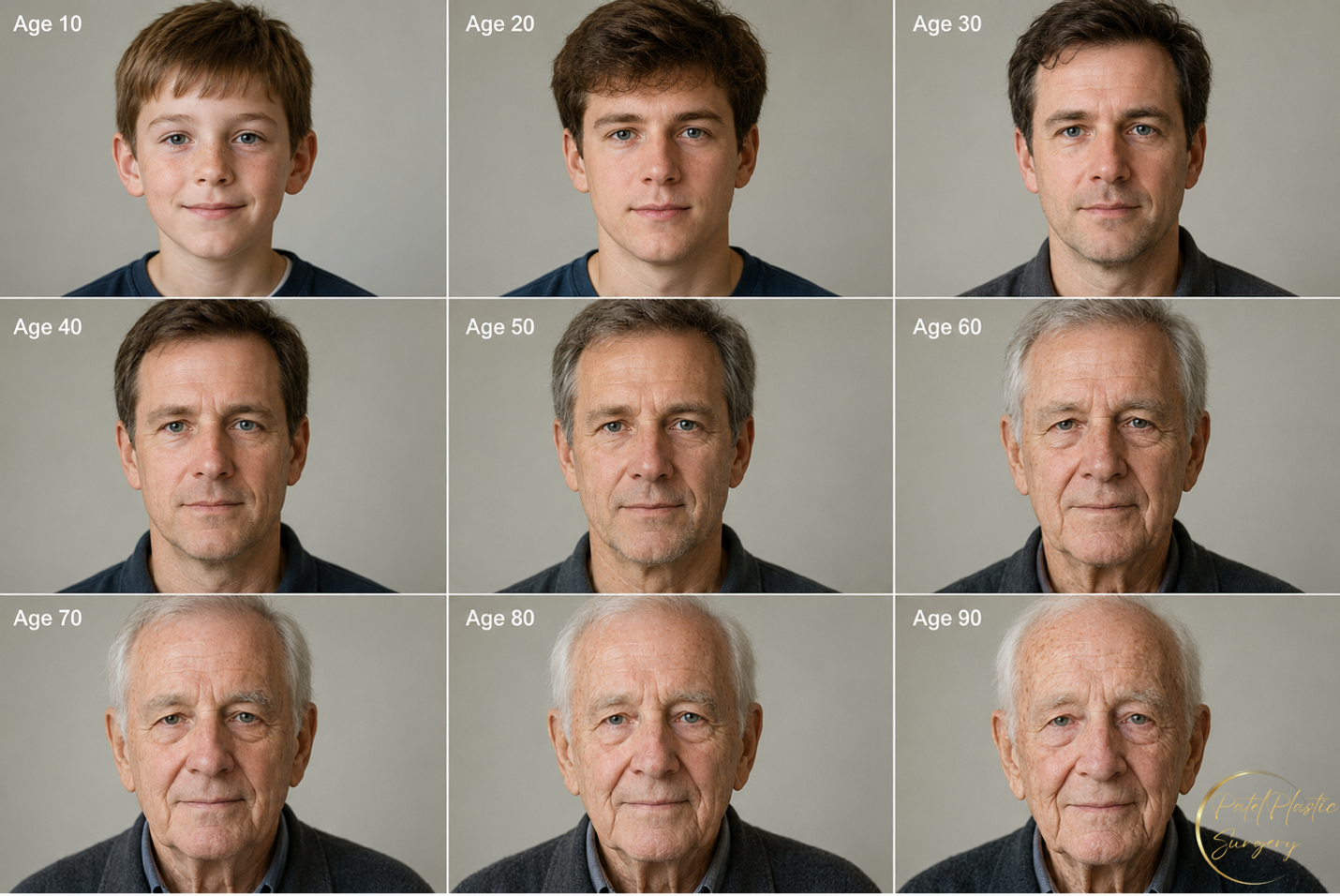
How Do Human Faces Age?: Changes Over Decades
Changes in Your 30s
In the early 30s, there is early volume loss in facial subcutaneous fat, especially below the eyes and around the cheeks and the temples. Fine lines like crow’s feet and smile lines begin to appear, and the face looks a little more angular and more tired.
Changes in Your 40s
In the mid-40s, the inverted triangle of youth seen in faces begins to change with the appearance of jowls, loss of cheek fullness, and more squaring of the face, together with hollowing under the eyes and midfacial flattening.Fine lines develop, which become more etched during the 40s. Bony changes also begin to appear, with shrinkage of the facial bones leading to depressions on various parts of the face (deeper set eyes, cheek hollows, etc).
Changes in Your 50s
In the 50s, there are hormonal changes as well as more loss of skin elasticity with elastin and collagen loss. There is variable tissue loss in the cheeks and along the jawline. Deep wrinkles become more pronounced, with the overall structure of the skin becoming thinner. There is cumulative pigment change in the skin (hyper- and hypopigmentation) and increased incremental sun damage.
Changes in Your 60s
In the early 60s, loss of skin elasticity, loss of elastin proteins, and laxity of deep structural ligaments develop. Tissue volume loss and tissue descent become more pronounced with an exacerbation of the jowls and deeper folds around the mouth and platysmal neck bands, together with loss of elasticity of the face and neck skin.Premature aging is still caused mostly by environmental factors, including ultraviolet radiation, smoking, and diet. Illness in later years also affects facial aging.
Aging and Collagen Loss
Collagen is the scaffolding that holds the skin together and makes up 75% of the dry weight of the skin.After the age of 25, we lose about 1% of our collagen each year, leading to loss of skin elasticity, enlargement of pores, and fine and deeper wrinkles. Sun exposure, poor diet, hormonal changes and stress all contribute to increased degradation of collagen. Signs of collagen loss: the skin begins to lose its firmness with an increase in the size of pores and thinning of the skin. The skin begins to appear drier as the decrease in collagen means that the water-holding capacity of the skin suffers. Normally, fine lines that appear when we smile or express ourselves, will disappear when the face relaxes. With the loss of collagen, these lines become more permanent (they become etched on the face!). The loss of bounce of the skin means that when the skin is pinched, it does not promptly reverse back to its status quo.Collagen and Menopause: Reduction of estrogen in menopause results in a drop in the production of collagen. Women will notice a marked change in skin thickness, firmness, and resilience. Women can lose up to 30% of their skin collagen in the first five postmenopausal years and a further decline of 2% per year after that.
Tips for Slowing Collagen Loss:
Ultraviolet light is a major culprit of enhanced skin aging with increased collagen loss.Avoiding sun exposure and use of sun protection is vital.
Smoking enhances collagen loss.
Overall body rest and reduction of stress are important.
Regular physical exercise.
Avoid marked changes in body weight, as there is loss of supportive ligaments with severe changes in weight.The face gets affected with loss of deeper fat deposits with severe or rapid weight loss and loss of skin collagen.
A healthy diet with essential vitamins, amino acids, proteins, and vegetables.
Topical antioxidants like vitamin C and niacinamide provide clear benefit.
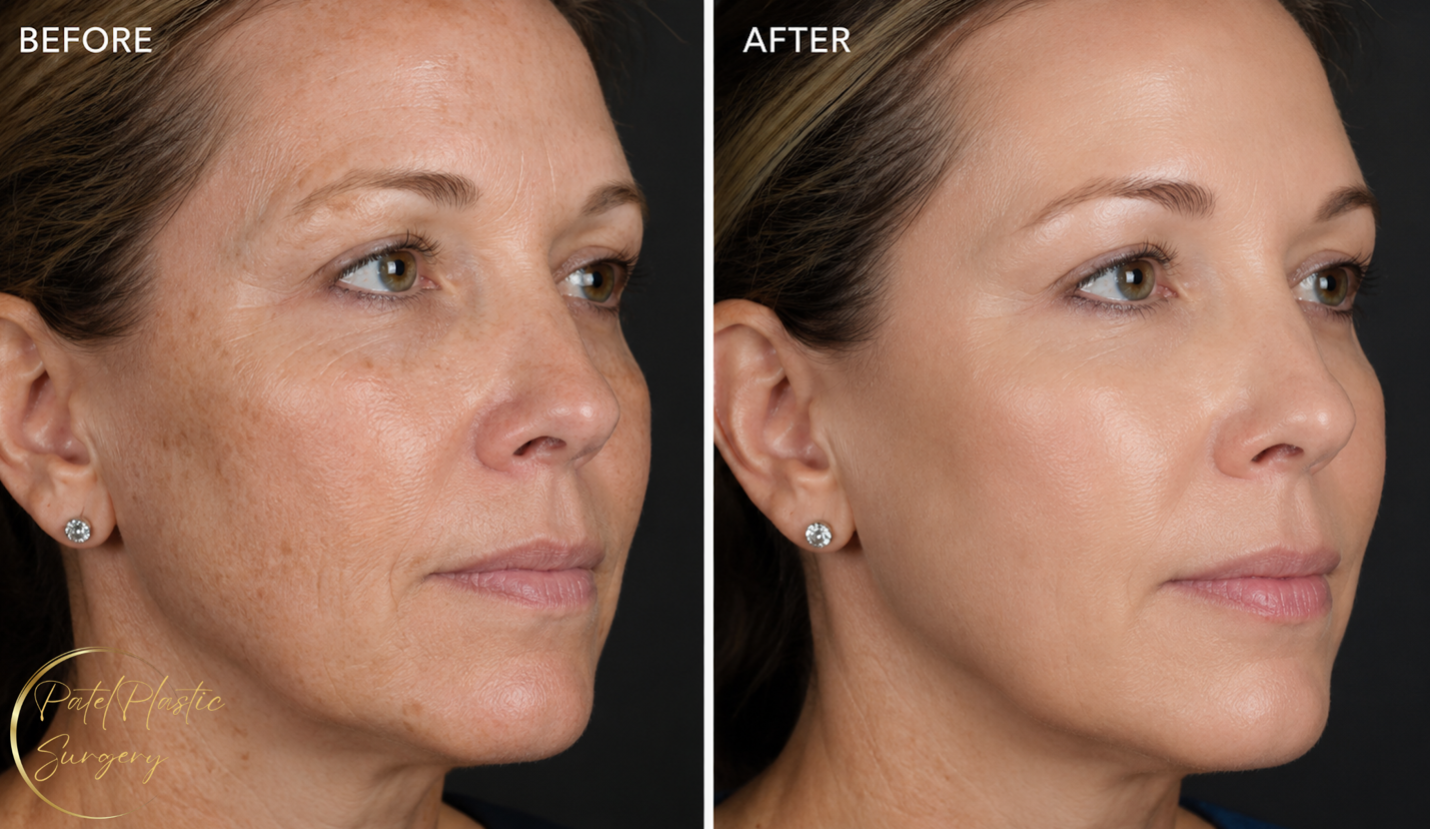
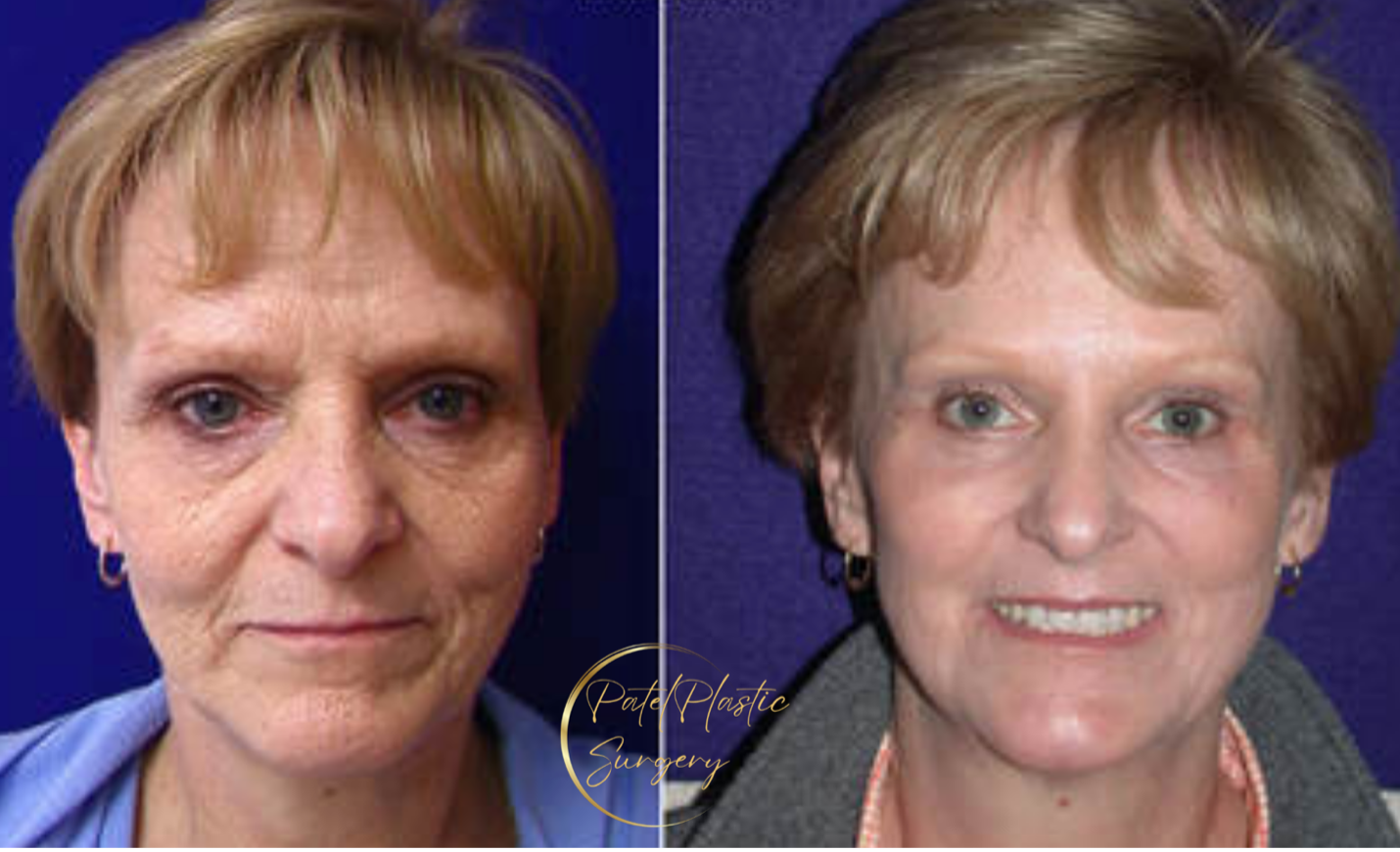
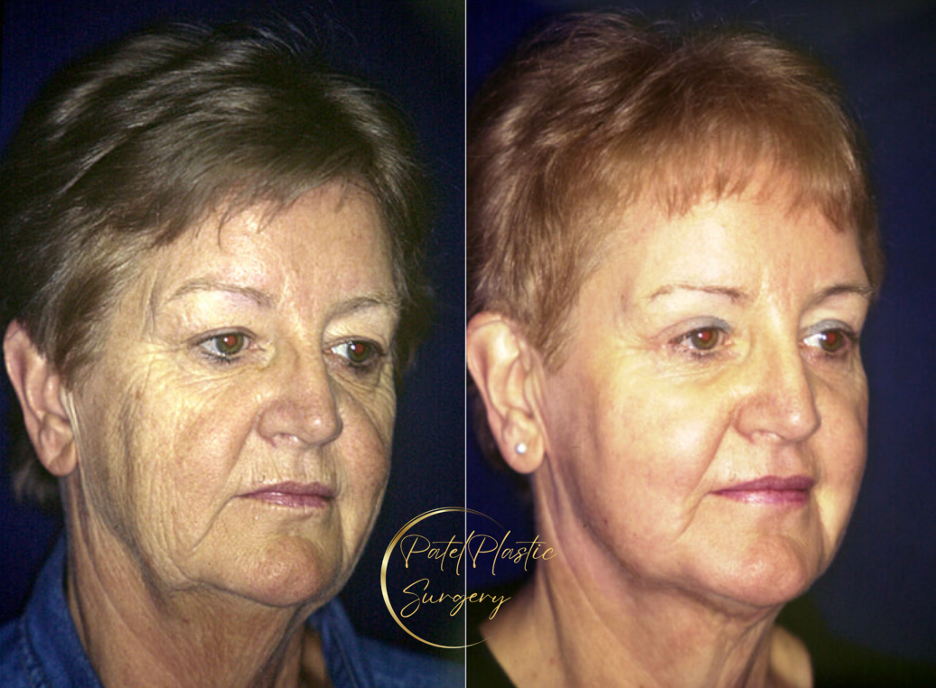
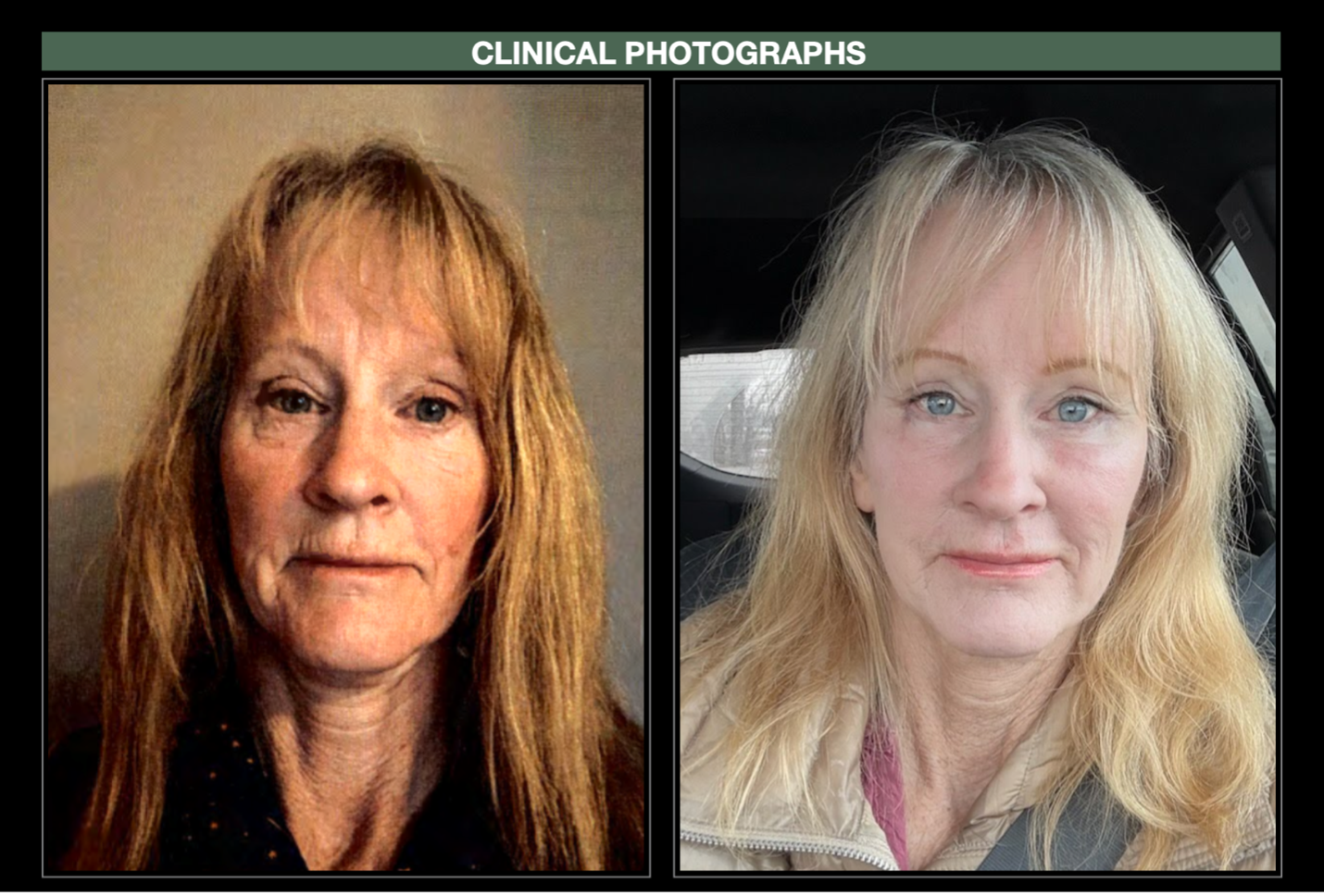
Topical products containing collagen will NOT increase your collagen, as these products will not be absorbed significantly by the skin and will act simply as good moisturizers. Therefore, they only temporarily improve the appearance of the skin.The Aerolase Neo Laser: Aerolase Neo is a 1064-nm wavelength laser with a 650 msec exposure.This unique combination allows the laser to penetrate the top layers of the skin to heat the dermis, resulting in neocollagenesis (formation of new collagen and elastin), which will lead to firmer and plumper skin from the deeper to the superficial layers. It helps to improve pore size, reduces fine lines, and tightens skin. There is an overall improvement in the skin texture. New collagen formation continues incrementally with regular treatment sessions. The treatment is non-invasive and comfortable and can be used on all Fitzpatrick skin types.Fig: Combined series of Aerolase Neo and 540 nm and 570 nm lasers to improve skin tone, texture, fullness, skin color, fine lines, and pores. The power of the Aerolase Neo for building new collagen and the use of different wavelengths to improve the skin color.Fractional CO2 Lasers: when treated appropriately, fractional CO2 lasers used in combination with serum extracts (stem cells) result in marked improvement in texture, tone, pores, and color of the skin, together with neocollagenesis. There is more significant downtime with these ablative lasers than there is with non-ablative lasers like the Aerolase Neo. They do, however, give the most tightening of the skin. Fractional CO2 lasers remain the gold standard for significant improvement in skin laxity, tone, deep wrinkles, and reversal of severe sun damage.Fig: Hammock Lift and use of fractionated CO2 laser and serum extract stem cells giving an overall improvement in fine lines, tissue laxity, tone and color.Fig: Improvement in fine lines, tissue laxity, tone and color with fractionated CO2 laser and serum extract stem cells.Fig: Self-portrait before and after lower blepharoplasty and full face CO2 fractionated laser and injection of stem cells from serum extract. The fractionated CO2 laser together with injection of stem cells from serum extract and fat is still the most powerful way of building new collagen and improving deeper skin wrinkles and smoothing out the skin.




 Premature aging is still caused mostly by environmental factors, including ultraviolet radiation, smoking, and diet. Illness in later years also affects facial aging.