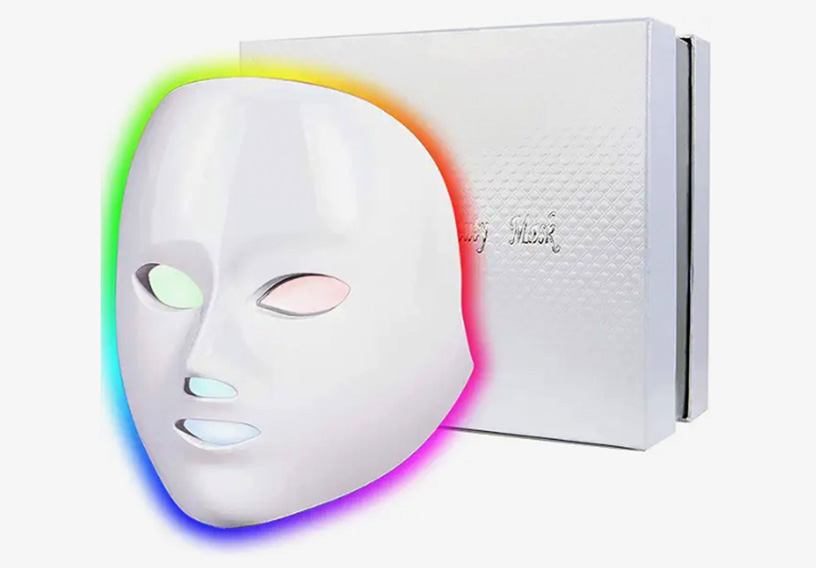
There are many devices now available which emit light in the blue, red and infrared wavelengths. These devices may be used by medical practitioners but many home-use devices which apply the light at more conservative levels are available.
What is blue light and what does it do to the skin?
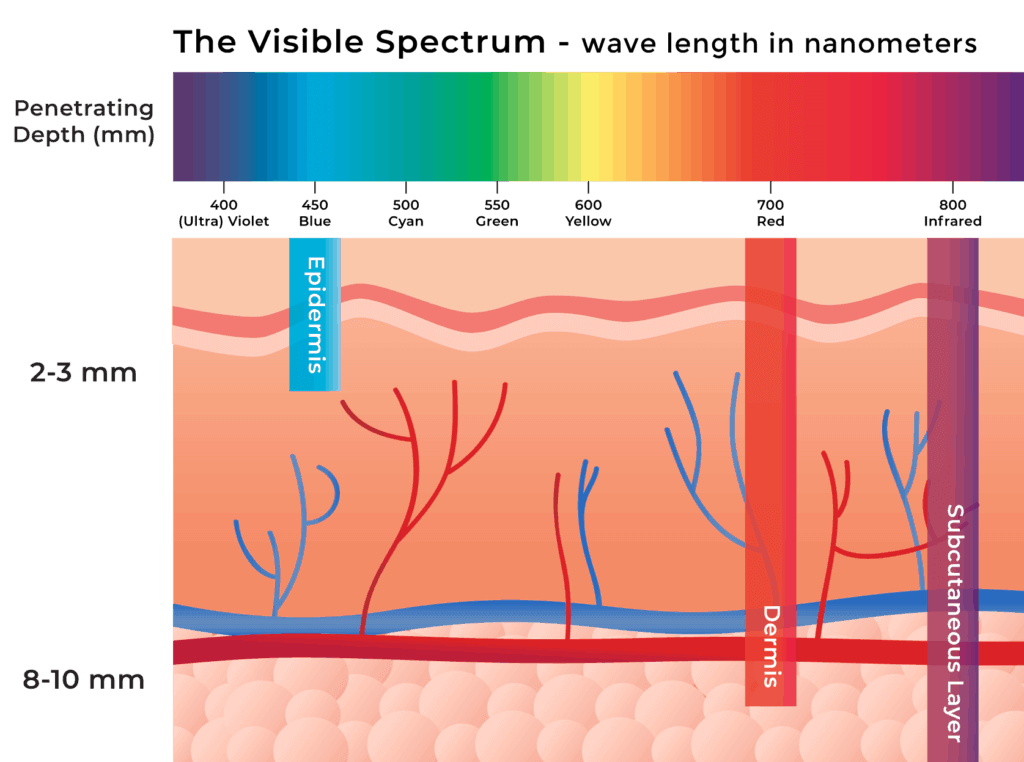
Blue light is emitted at about 450 nm and is in the visible light spectrum. Blue light is present in natural sunlight, and also emitted by devices such as computer screens, smartphones and tablets.
It has been shown that exposure to blue light during the daytime can have a positive effect on attention and mood. Blue light between 400 and 470 nm has also been found to be antimicrobial. Photodynamic inactivation of the cells of bacteria (gram positive and gram negative bacteria) and fungi has been shown to occur. The effect of blue light on bacteria is not universal and may not have an antimicrobial effect on some bacteria. Possible use of blue light in decontamination of wounds and nosocomial environments is being studied.
However, blue light exposure in the evening suppresses the production of melatonin. Melatonin is a hormone that regulates our sleep cycles. This suppression can cause insomnia and difficulty falling asleep. When the circadian rhythm is disrupted, it affects our performance during the day. It is best to reduce one’s screen time before bed and switching off devices emitting blue light.
What is Red Light and how does it work?
NASA used red light therapy to improve plant growth in space. Further studies were done to try to improve the healing of wounds. Whereas red light therapy is not currently used in space, it has been studied and it is thought to be useful to a certain degree. However, there are no proper controlled studies on red light devices and many of the studies have been sponsored by manufacturers of the devices.
One form of red light therapy is when used in photodynamic therapy when it is combined with laser and a photosensitizer drug to destroy tumor cells and improve skin from sun damage.
Red light therapy is known by many different names:
- Low-level laser light therapy
- Low-power laser therapy
- Non-therma LED light treatment
- Soft laser therapy
- Cold laser therapy
- Biostimulator therapy
- Photonic stimulation
- Photo biomodulation
- Phototherapy
Red light therapy is thought to improve wrinkles, redness, scars, fine lines and scars.
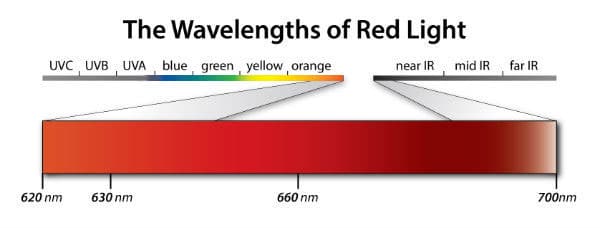
Red light therapy is at a lower energy than blue light and has a wavelength between 610 and 750 nm. Red light therapy is known as phot biomodulation whereby certain cellular processes are stimulated. The effects are described as giving warmth and relaxation. Red light penetrates the tissues and is effective in the first 25 mm of skin tissue with the more powerful devices. Devices sold for home use will only penetrate 2 – 3 mm of skin. To achieve deeper penetration, devices which produce 100 mW/Cm2 combine with LED light are needed.
Specifically, red light therapy may:
- Stimulate collagen production which improves skin elasticity and skin strength
- Increased fibroblast production which is responsible for making collagen. Collagen is a component of connective tissue in the skin and other structures
- Increases blood circulation
- Reduces inflammation in cells
What is red light therapy used for
- Improve wound healing
- Reduce stretch marks
- Reduce age spots, fine lines and wrinkles
- Improve skin texture
- Improve eczema, rosacea and psoriasis
- Improve scars
- Improve sun-damaged skin
- Improve acne
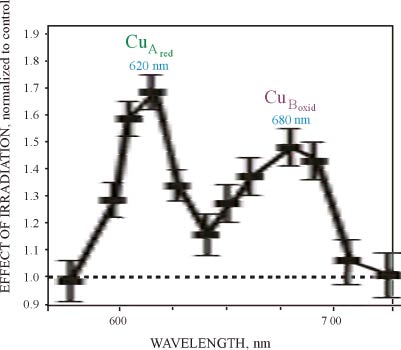
The most common wavelengths in home devices are in the 630 nm (orange-red) and 660 nm (deep red) wavelengths. These wavelengths have absorption peaks of cytochrome c oxidase which is the target of light therapy. The optimal wavelengths of red devices are 620 nm and 670 nm.
What are the cellular effects of red light therapy?
- Mitochondria have an energy producing copper enzyme called cytochrome c oxidase which allows mitochondria to absorb red light.
- Mitochondrial metabolism is restricted by nitric oxide which binds to cytochrome oxidase, which prevents it from using oxygen. Red light dissociates the nitric oxide molecule, thereby allowing cytochrome to resume its metabolic function producing energy.
- Red light improves the structure of water in cellular cytoplasm, functionally improving cellular processes. It is thought that improved surface tension of cells improves the exchange of ions.
- Red light is believed to penetrate skin and promotes the production of adenosine triphosphate (ATP), which is important to cells for the performance of certain functions. It is thought that red light may reduce inflammation, enhance blood circulation and promote collagen production.
Who can use red light?
There is no age limit on the use of red light. Although there is thought to be a potentially wide range of benefits, the exact degree of benefit gained is not known with the low-energy home devices.
What does the treatment feel like?
Light is applied for 5 – 15 minutes. Increased exposure does not improve the results. Low doses give a good effect but very high doses cancel out the effect.
How often should red light be used.
Light therapy should be applied for 5 – 15 minutes for three to four days a week for up to six weeks. Thereafter, twice a week application suffices.
What are the different devices that deliver red light?
Red light may be delivered by:
- LED devices, lasers
- incandescent lamps
- halogen lamps
- low level laser devices
- fluorescent device.
The best devices are those that do not produce heat: LEDs and lasers. Heat denatures the target cytochrome enzyme.
Advantages of red LED devices include:
- The most energy efficient (less energy wasted in the form of heat and deliver the most lumens per watt.
- Longest lasting (50000 hours)
- More specific wavelengths are available
- Does not heat the skin
- Good research has been done on these
- Safe to use all over the body
Infrared light therapy
Does red light therapy work?
There have been no proper blinded studies performed. Most of the clinical studies rely on subjective reports rather than stringent scientific assessments of the skin.
Is red light therapy safe?
There are no reported side-effects with the use of red light devices in the home as long as the eyes are protected and the skin is not over-treated. Eyes must be protected with shields when using home devices.
Caveat Emptor
Be careful of claims by companies selling these devices who claim that red light helps with weight loss, treats cellulite, treats depression, etc, etc!!
Different types of Infra Red Devices sold for Home Use:
Infrared light therapy
Infrared light is at 850 nm. Infrared light penetrates deeper than red light. It is often combined with red light therapy, heat and massage and used in the treatment of musculoskeletal conditions. Infrared and red light therapy triggers the release of nitric oxide. Nitric oxide causes vasodilatation leading to better blood flow in blood vessels. The effect of the boost in local circulation lasts several hours, triggering healing processes in the body.