




What Is “The Full Monty Plus Cheeks” Patel Facelift?
The Patel Deep Plane Facelift (Full Monty plus Cheeks) addresses all the aging changes affecting the face from the hairline to the lower neck and from ear to ear. Furthermore, we address volume loss (loss of fat and muscle), bony changes (atrophy or recession of bony surfaces), skin changes (loss of collagen and elastin), and structural changes (brow ptosis, brow asymmetry, dermatochalasis, steatoblepharon, cheek ptosis, malar grooves, zygomatic grooves, mid-face volume loss, jowls, lax jawline, neck laxity, neck bands, neck skin laxity, neck and face skin changes, eyelid malposition (ptosis, retraction, ectropion, canthal dystopia, asymmetry, effects of prior surgery, etc). It will be apparent that this is not quick cookie-cutter surgery and each face demands a detailed assessment and planning.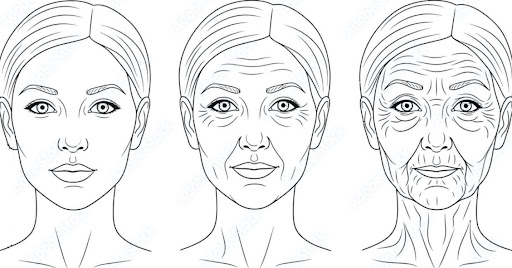
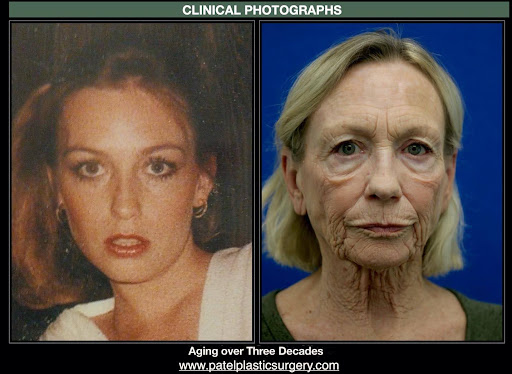
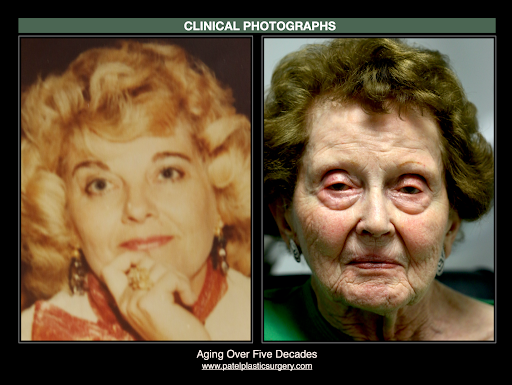
How does the face, the jawline, and the neck age?
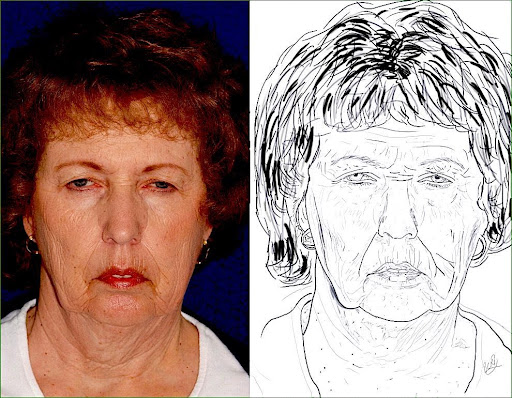
The face ages from the skin to the bones and from the hair and hairline to the upper chest. This is three-dimensional aging, and to obtain the best results, it is wise to address all the anatomical zones and all the layers of the soft tissues from the skin down to the bone. We designed the Full Monty Plus Cheeks Deep Plane Facelift to address these issues. In this article, we will go over our analysis and planning and show examples of outcomes.———
How do we analyze the face, jawline, and neck?
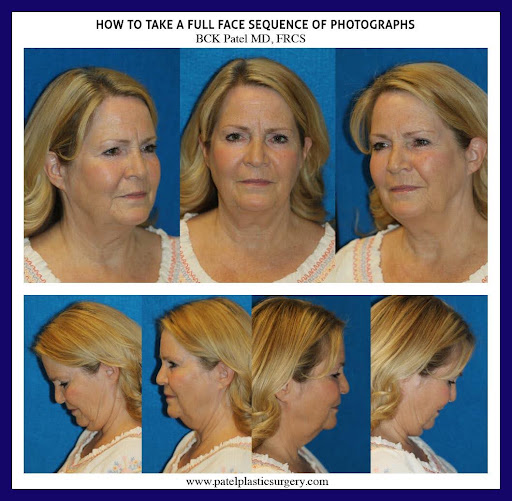 Analysis: Detailed analysis of the full face, jawline, and neck is carried out. The face is assessed looking straight ahead, at 45-degree oblique views, and at 90-degree lateral views. We call this our “dining room set,” as these are the different angles from which people see one’s face. We also assess the neck in the chin-down position.
———
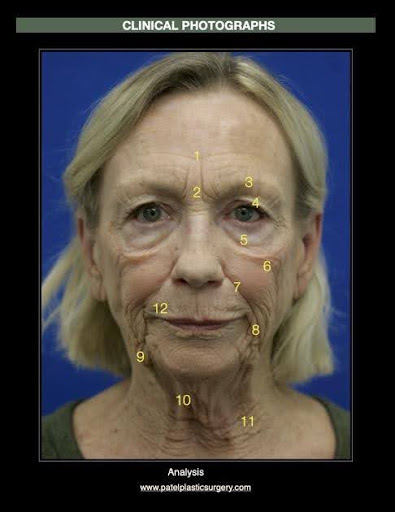 Sequential Analysis of the Whole Face, Jawline, and Neck: The three-dimensional changes are assessed in detail, and the analysis is shared with our patients, together with information on what can be done and the results to be expected.
What is done in “The Full Monty plus Cheeks” Patel Facelift?
1. Forehead
Forehead wrinkles, pores, irregularities, scars, volume loss, and solar elastosis are all addressed.2. The “Fat Nose Syndrome”
“Fat Nose Syndrome” is when the nasal bridge area becomes wide, and the vertical frown lines (“elevens”) pull the medial brows inward and lower. This creates the appearance of a fat nasal bridge. In men as well as in women, we slim this part of the nose, improve the vertical and horizontal frown lines, and improve the texture and tone of the skin with appropriate surgery, lasers, nano fat grafts, and stem cells.3. Brows
With age, all of our brows lose support and descend. Brows become asymmetric, lose volume, and hang heavy on the upper eyelids, making the upper eyelid dermatochalasis worse. Here we look at photographs from younger days to see where brows looked best in each of our patients and attempt to revolumize them, improve the shape and curve, and leave them looking youthful. Never too high!!!4. Upper Eyelids
We have separate articles addressing aging upper eyelids. One gets prolapse of fat medially but hollowing centrally. There is hooding of skin, especially laterally so that the skin hangs over the lashes. In ladies, this makes it difficult to apply makeup. In gentlemen, it can create an overhang with lashes troubling the eyes and affecting vision. Good, conservative blepharoplasty with careful attention to volume preservation, volume reduction (medially), recreation of the skin crease, correction of lash ptosis, and correction of any underlying ptosis (which is very common with age) is planned and performed.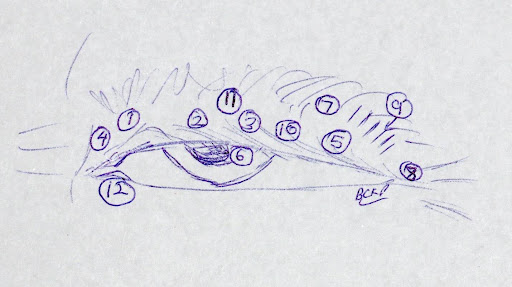
5. Lower Eyelids
We have all heard of “baggy lower eyelids,” which are one of the earliest manifestations of aging in the face. However, no two patients’ lower eyelids are the same. Because we rely upon good closure of the eyelids for the protection of the cornea, the lower eyelid assessment needs to be detailed and accurate. Many different factors are involved in the aged appearance of the lower eyelids.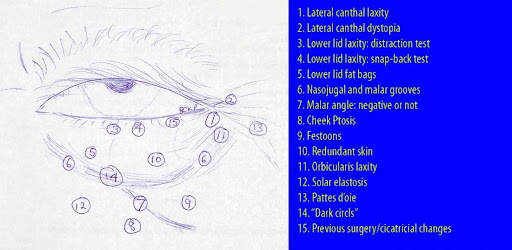
6. Cheeks and Festoons
We get volume loss in the cheeks, cheek ptosis, and, to some degree, festoons of varying degrees here as the cheek skin becomes lax with loss of deeper attachments, thereby allowing fluid collection, which is usually worse in the mornings. Festoons are worse in smokers, patients on the CPAP, patients with renal abnormalities, patients with thyroid problems, and after extreme weight loss, which is common these days. It is often said that the two most difficult operations in Plastic Surgery are treatment of Festoons and treatment of lower eyelid dermatochalasis! Here, there is an individualized approach based upon the medical history, sun exposure, smoking, use of the CPAP, etc. We rejuvenate the cheeks with volume augmentation and also elevation of the ptotic tissues. We developed a very specific way of addressing festoons with a cutaneous and a subcutaneous approach. This gives us very pleasing results.7. Nasolabial Folds
These grooves from the nose to the mouth become more pronounced from the age of 30 years onwards. The deep plane facelift allows us to create a more youthful appearance of this area and involves deep tissue repositioning, augmentation with nano fat grafts and laser and stem cell use.8. Melomental/Mentolabial Folds
Often called “marionette lines” for obvious reasons. The downturned corners of the mouth can make us look grumpy or sad, and the folds accentuate the appearance of the jowls. Again, here, the treatment involves deep tissue repositioning, augmentation with nano fat grafts and laser and stem cell use.9. Jowls
Or, as we call them, “the dreaded jowls.” Jowls begin to appear as early as our early to mid-30s and are affected by our genes (family history), our body type, weight loss and weight gain (repeated gain and loss results in worse jowls), weakness or strength of the underlying bony structure, and associated general illnesses (tissue laxity is worse in patients with diabetes and thyroid disease as well as in certain connective tissue diseases). Although jowls contain pockets of fat, jowls are a complex mixture of pre-ligament laxity, skin excess, excess fat deposition, mid-face ptosis, loss of ligamentous support, and associated body weight changes. Jowls require a very specific approach with a careful and accurate diagnosis of the different structures, and our deep plane facelift is designed to specifically address jowls.10. Neck Bands, Submental Fullness, & Neck Laxity
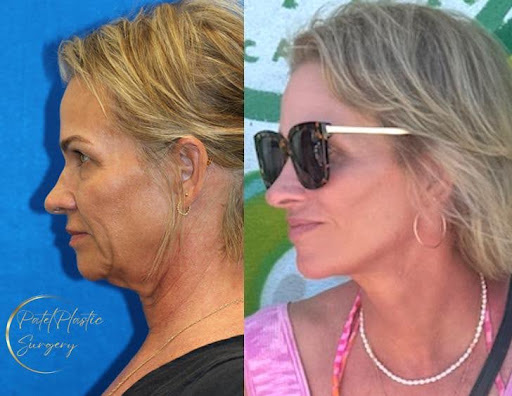
Besides lower eyelids and jowls, the neck is probably one of the most commonly complained-about features of the face and neck. Indeed, some degree of skin laxity and banding appears in our 30s. Because the neck defines the face, any loss of structure, slimness, or firmness makes the face look older. Artists and the public have admired and criticized the neck for millennia. Indeed, a famous book called I Feel Bad About My Neck by Nora Ephron discussed the face and, in particular, the neck in society in great detail. The neck requires work on the skin, the subcutaneous tissues, the platysma, the tissues deep to the platysma, the digastric muscles, the sub-digastric deep fat, and the submandibular glands (we reposition them and do NOT cut them out as they are important producers of saliva for our mouths). We use stem cells and lasers to improve the texture of the skin. As we often lecture, “the money is always in the neck.” The more beautiful the neck, the more gorgeous the face (see examples below).
11. The Neck Skin and the Necklace Lines
When we assess the face for a deep plane facelift, we also pay close attention to the aging of the neck. The face skin has as many as 900 sebaceous (oil) glands per square centimeter, but this decreases in the neck and decreases further in the chest until the rest of the body has about 100 glands per square centimeter. The more oil glands, the faster the healing from lasers and other treatments (peels, dermabrasion, etc.) applied to the skin. The surgeon must know these variables to administer the appropriate treatment to the face, neck, and upper chest. This ensures healing without scarring.12. The Lips and the Perioral Region
The mouth area ages faster than the rest of the face. This is because of the constant muscle movement (chewing, talking, smiling, puckering, etc.), resorption of the jawbone (which causes lengthening of the upper lip, loss of deep support, loss of upper teeth show, sagging of the skin, and loss of volume), and gravity resulting in ptosis of soft tissues, skin, and fat pads. Support in the lateral perioral region decreases, causing marionette lines and worsening jowls. The skin in the perioral region also has fewer sebaceous oil glands compared to the rest of the face, resulting in slower healing from trauma (daily trauma and surgical trauma), dryness, and dehydration. Sun damage is also more common, as it is difficult to properly apply sunscreen to this region. Finally, habits like smoking enhance loss of collagen and elastin. The result is vertical lip lines, horizontal aging lines on the upper and lower lips, skin atrophy, volume loss, and a generally aged appearance. Remember that this part of the face, and certain other areas, may need repeat fractionated CO2 laser and mesenchymal stem cell application about nine to twelve months after deep plane facelift surgery to achieve the best result.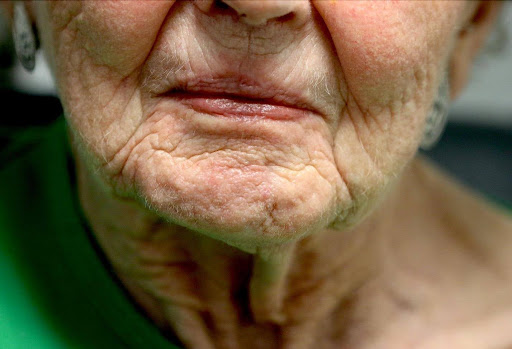
13. Chin
The chin is assessed for projection, smoothness, and balance with the rest of the face. Patients may need augmentation with an implant or fillers, and the skin and deeper tissues are treated appropriately during surgery.14. Nose
The nose always gets larger relative to the rest of the face, and we get ptosis of the tip of the nose. The skin also becomes rougher and has larger pores. We shrink-wrap the skin with the relevant lasers and improve skin texture and tone with lasers and stem cells. The nasal tip is raised with the extended endoscopic brow lift.15. Ears
Ears generally become larger relative to the face, and the earlobes become longer and lose volume. We address the balance of the ears and earlobes relative to the face. It is possible to make “hanging” earlobes more defined, and we augment the volume loss in the earlobes with nano fat grafts. Many patients will have wrinkles on the earlobes that age us, and these are improved with nano fat grafts and lasers. When patients have had sun damage to the ears, we improve the skin with lasers.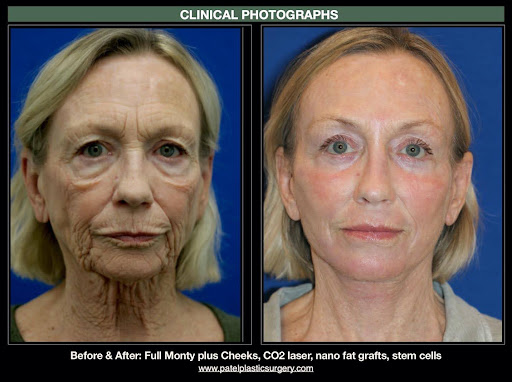
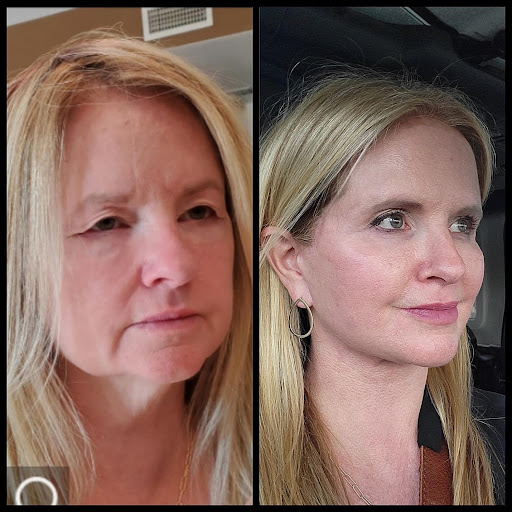
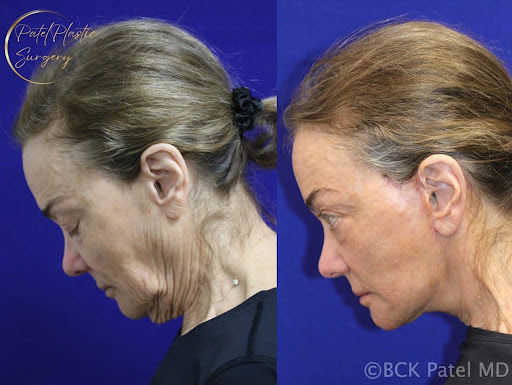
———
How do I maintain my results after a deep plane facelift and neck lift?
Performing an excellent full Monty with Cheeks, use of the fractionated CO2 laser, nano fat grafts, and stem cells does not stop you from aging. However, the aging process is slowed, and the changes in the skin and structure of the face are less than if the surgery had not been performed.- The skin of the face and neck is treated with different lasers, depending upon your lifestyle. As many of our patients lead a very outdoorsy lifestyle, we treat any pigment spots and broken vessels with relevant lasers once every six months or so. The collagen and elastin in the skin deteriorate as we age, and this is built up with the use of the Aerolase laser. We do this laser once a month for five or six treatments starting a month after the facelift and then maintain the skin every few months with this laser.
- Patients with deeper face wrinkles (Fitzpatrick type 1 and 2 skin, which is the pale, northern European skin type) will need a fractionated CO2 laser together with mesenchymal stem cells about nine to twelve months after the Full Monty and Cheeks. This allows us to improve the wrinkles even more. We will discuss this individually with each patient based on skin type.
- The frown lines will need some neurotoxin injections from time to time to keep the “elevens” from coming back. It also maintains your brows in the new position we put them in.
- Fillers: we use very few fillers (we avoid the chipmunk look that is becoming so prevalent) and only use small amounts to create shape in the lips and use some fillers in the nasolabial and melolabial folds if and when needed.
- Depending upon your skin type, we will prescribe the correct strength of Retin-A for your skin. Vitamin C serum is useful for the lower eyelids. And some patients may need an anti-pigment cream if they are prone to melasma. We individualize the assessment and management of your skin. Just as with the neck, the more beautiful the skin, the more beautiful the face looks.
———
Useful Links
- How Do Human Faces Age?
- Deep Plane Facelift and Neck Lift: Why It Is Important for You to Send Us Your Bad Photographs
- Deep Plane Facelift and Neck Lift: Why It Is Important for You to Send Us Your Younger Photographs
- Deep Plan Facelift and Neck Lift: What to Expect on the Day of Surgery
- Deep Plane Facelift and Neck Lift: What to Expect the First Week After Surgery
- Deep Plane Facelift and Neck Lift: What to Expect Week 2 to Week 4 After Surgery
- Hyperbaric Oxygen Therapy After Facelift and Neck Lift Surgery
Schedule a Deep Plane Facelift Liposuction Consultation in Salt Lake City
We can arrange an in-person clinic appointment or a Zoom appointment, as we see patients from across the country and overseas. Schedule your visit using our online form or by calling Dr. Patel’s office at (801) 8413-3599 for Salt Lake City patients or (435) 215-0014 for Saint George patients.References
- Analysis of the aging Indian Face: the first comparative anthropological study. Joos Z, Patel BC. Journal of the Tamil Nadu Ophthalmic Association (JTNOA). 2017;55(2):972-980.
- Aesthetic surgery of the aging neck: options and techniques. Patel BCK. Orbit. 2006;25(4):327-56.
- Anatomy Head and Neck: Platysma. Hoerter JE, Patel BCK. StatPearls [Internet]. Treasure Island (FL): StatPearls Publishing; 2023; PMID: 31424878.
- Aesthetic Surgery of the Aging Neck. Patel B.C.K. Shiffman Melvin A. (ed) Simplified Facial Rejuvenation. 2007 575-592.
- Limited incisional necklift procedures: A video presentation. Patel B.C.K. Presented at the American Society of Ophthalmic Plastic and Reconstructive Surgery Meeting, New Orleans, November 7, 1998.
- Cosmetic Surgery of the Neck. Patel B.C.K. Presented at the Facial Plastic Surgery Meeting, Las Vegas, June 2-4, 2006.
- Neck rejuvenation: indications, techniques and advances. Invited speaker, American Society of Ophthalmic Plastic and Reconstructive Surgeons, New Orleans, November, 1998.
- Keynote Lecture: The Aging Indian Face. New insights and a comparative study. Applications to surgery in India. Presented at the Oculoplastic Association of India meeting, Vadodara, India, October 1-2, 2016. The OPAI Annual Meeting, Vadodara, India, October 1 – 2, 2016.