

For residents, fellows, plastic surgeons and oculoplastic surgeons
The importance of placing temporary tarsorrhaphy sutures properly
Temporary tarsorrhaphy sutures are often needed at the end of surgical procedures on the orbit, the eyelids, after repair of facial fractures and after reconstruction of eyelids and facial structures. A tarsorrhaphy may be needed when treating or preventing the occurence of chemosis and also when one wants to protect the cornea in the postoperative period.
Some of the common indications for a temporary tarsorrhaphy are:
- at the end of a cosmetic procedure like a lower blepharoplasty or cheek lift
- after surgery on a patient with thyroid orbitopathy
- after a skin graft to the upper or lower eyelid
- after eyelid reconstruction following tumor removal from an eyelid
- after a corneal transplant
- to retain a socket symblepharon ring after fornix reconstruction
- after pterygium surgery
- after an enucleation or evisceration to retain the conformer and reduce chemosis
- in a patient with an acute facial palsy to protect the cornea
- when treating a recalcitrant corneal erosion or infection
- in the presence of an anesthetic cornea
- at the end of an orbital tumor or trauma case
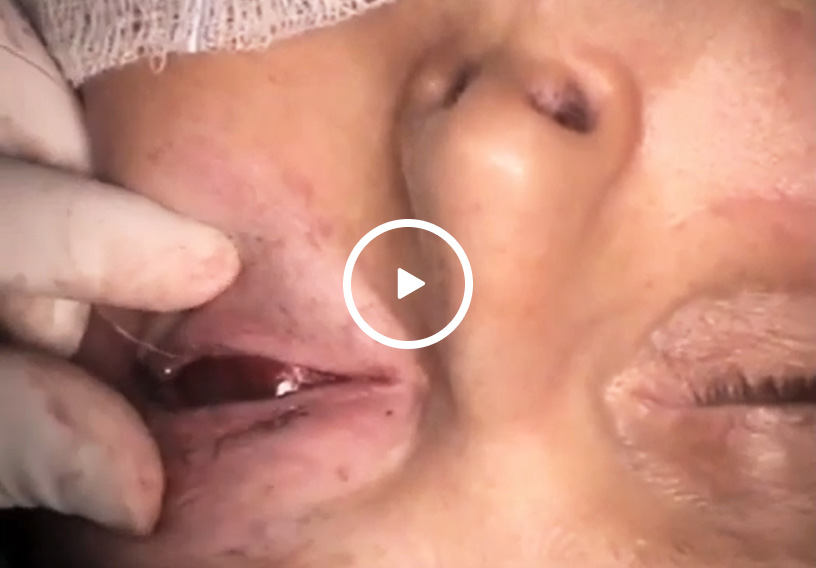
In this video, Dr. BCK Patel MD shows the eyelid margin anatomy and show how temporary tarsorrhaphy sutures are placed at the gray line to appose the eyelids. A lateral third suture will close the lateral third, an additional central suture will generally give protection of the whole cornea. Only rarely is a third, medial suture needed.